Finding the best walker boot supplier in China requires more than comparing prices on a marketplace. The right partner should understand fit, support, durability, and patient comfort. A low quotation means little if the boot cracks near the hinge or the straps lose tension after repeated use.
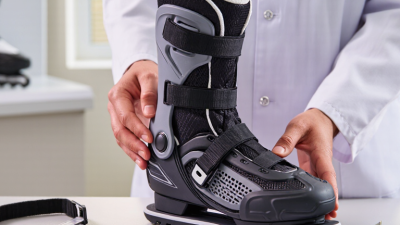
Dr. Robert Anderson, an orthopedic foot and ankle specialist, explains the core principle clearly: “A walking boot should protect healing tissue without creating new problems.” This idea should guide every supplier evaluation. Ask for material specifications, product drawings, size charts, and test reports. Examine the shell thickness, air-pump function, liner softness, tread pattern, and fastening strength. Small details matter. A rough edge can irritate skin. Weak Velcro can reduce stability.
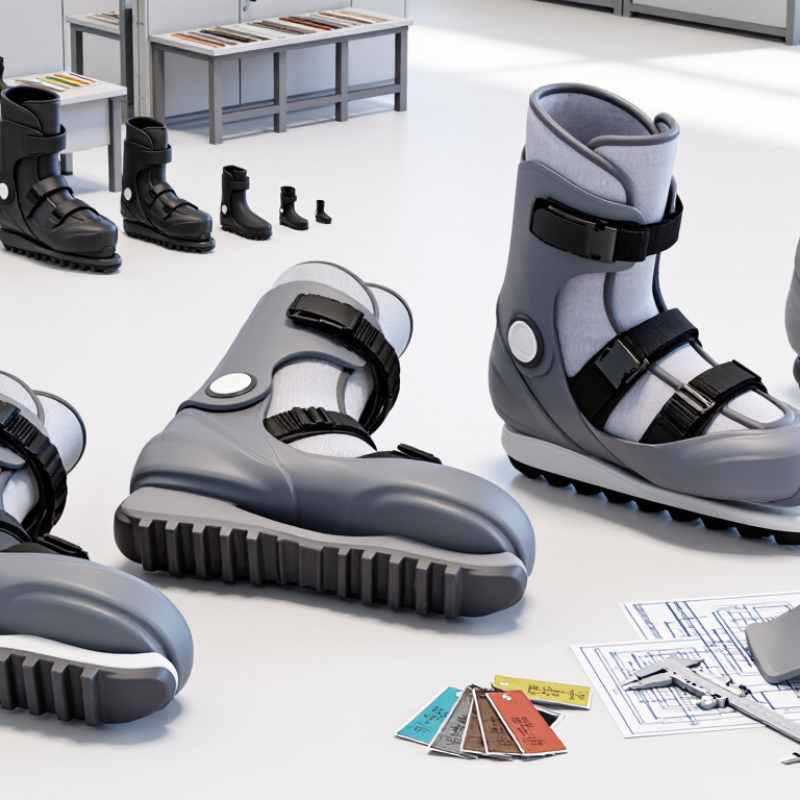
Reliable Chinese manufacturers usually provide samples before bulk production. Use them. Check several sizes on different foot shapes, including wider feet. Request factory photographs, production videos, and quality-control records. If possible, arrange an independent inspection before shipment. Supplier claims deserve verification.
Communication also reveals expertise. A professional supplier will discuss orthopedic use, packaging, customization limits, and realistic production times. Be cautious when every answer is vague or overly confident. No checklist is perfect. Even experienced buyers can miss a hidden weakness in the foam or buckle.
This guide explains how to compare walker boot suppliers through evidence, practical testing, and transparent communication. It focuses on dependable quality rather than attractive promises. The strongest supplier may not be the cheapest. It should be the one that consistently delivers safe, comfortable, and traceable products.
How to Find the Best Walker Boot Supplier in China?
Define Your Walker Boot Requirements and Target Market
Before contacting a Chinese supplier, describe the walker boot you actually need. Specify the support level, intended user, closure style, sole pattern, liner material, and available sizes. A post-surgery user may need a roomy toe area and simple straps. A sports injury market may prefer a lighter shell and stronger ankle control. These details affect tooling, testing, packaging, and cost.
Your target market also shapes the product. Measure local foot sizes carefully. Check whether customers prefer black, grey, or clinical white. Consider humid warehouses, cold delivery routes, and retail shelf space. Decide your expected order quantity, target price, and replacement-part policy. Small details matter. A removable liner can improve cleaning and customer satisfaction. However, it may increase assembly time.
I once treated “standard walker boot” as a complete specification. It was not. The sample looked acceptable, but the heel fit felt loose and the straps were difficult to adjust. That mistake showed me the value of user trials. Ask suppliers for material samples, size charts, inspection records, and clear production timelines. Request photos of stitching, sole bonding, and carton protection. Verify whether their quality process matches your market requirements. A reliable supplier should explain limitations, not promise everything. Avoid approving samples from photographs alone. Test walking comfort, stability, weight, and adjustment with several users before placing a larger order.
| Requirement Dimension | Recommended Specification | Typical Planning Data | Why It Matters for Supplier Selection |
|---|---|---|---|
| Product Category | Medical walking boot or orthopedic walking brace | Short boot, tall boot, or pneumatic boot | The product category determines the required tooling, materials, testing, documentation, and regulatory pathway. |
| Target Market | Define destination countries and sales channels before requesting quotations | Hospitals, clinics, pharmacies, rehabilitation centers, distributors, or e-commerce | Market requirements affect labeling, language, packaging, product claims, importer responsibilities, and supporting technical files. |
| Patient Use Case | Specify intended use and injury or recovery stage | Post-injury support, post-operative recovery, fracture protection, or rehabilitation | A clear intended use helps prevent unsuitable design claims and supports consistent product positioning. |
| Boot Height | Choose short or tall construction according to the treatment application | Short design: ankle and lower-foot support; tall design: support extending farther up the lower leg | Height influences stability, weight, comfort, shipping volume, and the size range required for fitting. |
| Size Range | Use foot length, shoe-size conversion, and left/right fitting references | Common programs cover approximately 3–5 size groups, depending on the design | Accurate sizing reduces returns and requires supplier-provided size charts, fitting samples, and dimensional inspection. |
| Fit Adjustment | Adjustable straps, hook-and-loop closures, padding, and toe-box space | At least 2–4 independently adjustable closure areas are common in adjustable designs | Adjustment flexibility supports different swelling levels and improves fitting consistency across users. |
| Structural Support | Select the required level of ankle, heel, and lower-leg stabilization | Rigid shell, semi-rigid shell, or flexible support structure | The supplier should explain the support structure, material composition, load performance, and design limitations. |
| Air-Cushion Option | Add an inflatable liner only when adjustable compression is needed | Manual inflation system with valve, air bladder, and pressure-release function | Air systems require additional leak testing, valve inspection, user instructions, and quality controls. |
| Outsole Design | Lightweight, slip-resistant, stable, and suitable for indoor and outdoor use | Rubber, EVA, or multi-layer sole construction with textured tread | Outsole material and tread geometry affect traction, durability, weight, comfort, and safety positioning. |
| Product Weight | Set a maximum weight per boot based on the target user and sales channel | Many adult walking boot designs are planned within approximately 0.7–1.5 kg per boot | Lower weight can improve user comfort and freight efficiency, but excessive weight reduction may affect stability. |
| Materials | Define shell, liner, padding, strap, outsole, and fastener materials | Common combinations include molded polymer, EVA foam, textile lining, hook-and-loop straps, and rubber or EVA soles | Material specifications support consistent production, durability assessment, chemical compliance, and cost control. |
| Comfort Features | Breathable liner, rounded edges, removable padding, and pressure-distribution zones | Use at least one fitting sample for both comfort review and dimensional verification | Comfort features influence clinical acceptance, repeat purchases, customer reviews, and return rates. |
| Quality Requirements | Create written acceptance criteria before mass production | Check dimensions, stitching, bonding, strap strength, sole adhesion, inflation leakage, and surface defects | Documented inspection standards make supplier comparisons objective and reduce disputes over defects. |
| Regulatory Documentation | Request applicable technical documents for the destination market | Product specification, risk assessment, material information, labeling, instructions, and test reports where applicable | Documentation requirements vary by market and intended use; the importer remains responsible for verification. |
| Customization Level | Decide whether standard, semi-custom, or fully custom development is required | Standard design: lowest development complexity; custom tooling: higher cost and longer development time | Customization affects tooling investment, minimum order quantity, approval stages, and intellectual-property ownership. |
| Sampling Timeline | Agree on sample stages and written approval checkpoints | Initial samples commonly require about 7–21 days, depending on customization | A defined sample process helps verify fit, function, appearance, packaging, and documentation before production. |
| Production Planning | Confirm capacity, production schedule, inspection date, and shipment window | A typical repeat production cycle may take approximately 30–60 days after approval | Lead time varies with order quantity, materials, tooling, seasonality, and production capacity. |
| Minimum Order Quantity | Match the order quantity to forecast demand and inventory capacity | Standard products may support lower quantities; customized products often require higher quantities | MOQ directly affects unit price, cash flow, inventory risk, and the feasibility of market testing. |
| Packaging | Specify individual box, master carton, labels, inserts, and shipping marks | Retail packaging usually includes product identification, size, care instructions, and user guidance | Packaging must protect the boot during transport and meet the language and labeling needs of the target market. |
| Supplier Evaluation Score | Use a weighted comparison rather than price alone | Suggested weighting: quality 30%, compliance 20%, product fit 20%, delivery 15%, communication 10%, price 5% | A weighted score highlights suppliers that can reliably meet the full product and market requirement. |