7 Rotator Cuff Support Tips for Shoulder Pain?
Shoulder pain can turn ordinary movements into careful calculations. Reaching for a mug, fastening a seat belt, or sleeping on one side may suddenly feel difficult. The rotator cuff helps center the upper arm bone inside the shoulder socket. When these tendons become irritated, weak, or overloaded, support must be practical, not promising.
Orthopedic surgeon Dr. Joshua Dines describes the rotator cuff as “a group of four muscles and tendons that stabilize the shoulder.” That stability matters during lifting, throwing, and reaching overhead. However, rotator cuff support is not limited to braces or compression sleeves. It can include gentle mobility, better posture, sensible activity changes, and progressive strengthening. A warm shower before movement may loosen stiffness. A pillow under the elbow may reduce nighttime pulling. Small details count.
This guide presents seven useful tips for shoulder pain. It also avoids a common mistake: treating every painful shoulder the same way. Pain after a fall needs different attention than gradual soreness from repetitive work. Some exercises may help one person and irritate another. That part is easy to overlook. If pain causes weakness, visible swelling, numbness, or limited movement, professional assessment is important. A qualified clinician can identify whether the problem involves the rotator cuff, neck, joint, or another structure. These suggestions support informed care. They do not replace diagnosis, imaging, or a personalized rehabilitation plan.
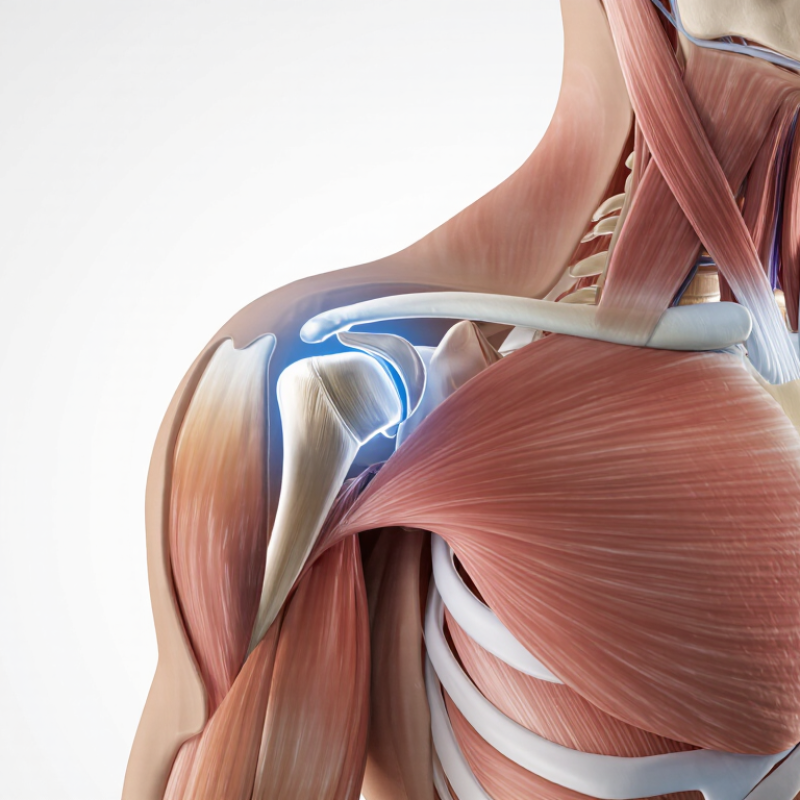
Rotator Cuff Anatomy and Tear Prevalence: 13% at 50–59, 51% at 80+
7 Rotator Cuff Support Tips for Shoulder Pain?
Rotator cuff tears become more common with age, but imaging alone does not define disability. A Japanese population study using ultrasonography found tears in about 13% of adults aged 50–59. The rate reached 51% among adults aged 80 and older (Yamamoto et al., Journal of Shoulder and Elbow Surgery, 2010). Many tears caused no noticeable symptoms. That detail matters. Pain can reflect bursitis, stiffness, tendon overload, or neck problems instead.
Tip 1: Reduce painful overhead lifting temporarily. Tip 2: Keep gentle shoulder movement, rather than complete rest. Tip 3: Use slow, controlled external-rotation exercises after professional guidance. Tip 4: Support your arm during sleep with a pillow. Tip 5: Avoid sudden increases in gym volume. Tip 6: Track night pain and weakness for two weeks. Tip 7: Seek assessment after a fall or sudden loss of strength.
The American Academy of Orthopaedic Surgeons advises clinical evaluation when pain persists, especially with weakness or reduced function. A useful exercise should feel controlled, not sharp or increasingly painful. This advice is not perfect for everyone. Some people need physiotherapy, imaging, or surgical discussion. Do not assume that a “small tear” needs no care, or that a “large tear” always needs surgery. Context matters.
7 Rotator Cuff Support Tips for Shoulder Pain? — Rotator Cuff Anatomy and Tear Prevalence: 13% at 50–59, 51% at 80+
| Topic |
Evidence-Based Information |
Practical Support Tip |
| 1. Supraspinatus |
The supraspinatus helps initiate shoulder abduction and contributes to humeral-head stability. Its tendon passes beneath the acromion and is commonly involved in rotator cuff disease. |
Avoid repeatedly lifting through painful overhead ranges. Keep loads close to the body and use controlled movements. |
| 2. Infraspinatus |
The infraspinatus is a major external rotator of the shoulder and helps stabilize the glenohumeral joint during arm movement. |
Use gentle, pain-limited external-rotation exercises only when appropriate and preferably after professional assessment. |
| 3. Teres Minor |
The teres minor assists external rotation and helps maintain shoulder-joint stability, especially when the arm is elevated. |
Progress strengthening gradually; sudden increases in resistance can aggravate irritated tendons. |
| 4. Subscapularis |
The subscapularis is the largest rotator cuff muscle and the primary internal rotator of the shoulder. It also helps keep the humeral head centered in the socket. |
Maintain comfortable shoulder motion and avoid forceful internal rotation if it reproduces pain. |
| 5. Imaging-Detected Tear Prevalence |
A population-based ultrasound study reported full-thickness rotator cuff tears in approximately 13% of adults aged 50–59 and 51% of adults aged 80 years or older. Many tears are asymptomatic. |
An imaging finding should be interpreted alongside symptoms, strength, range of motion, and physical-examination results. |
| 6. Pain and Tear Severity |
The size of a tear does not always predict pain. Symptoms may also be influenced by inflammation, stiffness, weakness, trauma, sleep position, and other shoulder conditions. |
Track pain, night symptoms, weakness, and activity limits rather than relying on scan results alone. |
| 7. Safe Support and Evaluation |
Relative rest, appropriate rehabilitation, posture and activity modification, and individualized pain management may help. Sudden traumatic weakness may indicate a more serious injury. |
Seek clinical evaluation for persistent pain, marked weakness, loss of motion, deformity, fever, numbness, or symptoms following a significant injury. |
Important note: Rotator cuff tears can occur without symptoms, and shoulder pain can occur without a tear. Prevalence estimates vary according to age, study population, imaging method, and whether partial or full-thickness tears are counted.
Reference: Population-based ultrasound research has reported an age-related increase in full-thickness rotator cuff tears, including approximately 13% among adults aged 50–59 and 51% among adults aged 80 years or older. These figures are observational estimates and do not mean that every tear causes pain or requires surgery.
Seven Support Strategies: Load Management, Ice, Sleep, and Ergonomics
Shoulder pain deserves measured support, not heroic rest. The American Academy of Orthopaedic Surgeons reports that nearly two million Americans seek care for rotator cuff problems annually. Pain can reflect tendon overload, bursitis, stiffness, or a tear. A clinical assessment matters, especially after a fall, sudden weakness, or visible deformity.
Tip 1: Manage load. Reduce painful lifting, but avoid complete inactivity unless advised. Tip 2: Apply wrapped ice for 15–20 minutes after aggravating activity. Tip 3: Sleep on your back or the opposite side, with a pillow supporting the painful arm. Tip 4: Keep your screen near eye level, and let your elbows rest beside your body. Small changes help.
Tip 5: Take brief movement breaks every 30–60 minutes. Tip 6: Use gentle, clinician-approved mobility and strengthening exercises. Sharp pain is not a training target. Tip 7: Seek evaluation if night pain persists, weakness increases, or symptoms continue beyond several weeks. The American Academy of Orthopaedic Surgeons cautions that exercises should match the injury stage. I still find “perfect posture” unrealistic; consistent, comfortable positioning is more useful. Ice may soothe symptoms, but it does not repair damaged tissue.
Progressive Exercise: AAOS Guidance and Evidence from 6–12-Week Programs
Shoulder pain can make simple tasks feel surprisingly heavy. A shirt sleeve may become a daily test. Progressive exercise offers a practical form of rotator cuff support, especially when guided by a qualified clinician. AAOS guidance commonly emphasizes restoring motion, improving shoulder strength, and matching exercises to the person’s symptoms.
A six-to-twelve-week program may begin with gentle movements, such as pendulum swings or assisted arm raises. Isometric external rotation can follow: keep the elbow near your ribs and press lightly against a wall without moving the arm. Later, resistance-band rotations and controlled raises may build endurance. Keep the movement slow. Sharp pain is a warning, not a training target. Mild muscle effort can be acceptable, but worsening night pain deserves attention.
Evidence from structured exercise programs suggests that consistent strengthening can improve pain and function over several weeks. However, progress is rarely tidy. Some people improve within six weeks; others need twelve weeks or longer. I would not treat a calendar as a promise. Technique matters more than heavier resistance, and a clinician should reconsider the plan if weakness, numbness, or lost motion increases. Rest between sessions, adjust painful exercises, and record small changes, such as reaching a higher shelf or sleeping on the affected side again. My own caution is simple: exercise advice can sound precise while individual shoulders remain unpredictable.
Escalation and Recovery: Imaging Criteria and 6–12-Month Outcome Data
Rotator cuff pain needs staged decisions, not automatic scans. The American College of Radiology recommends shoulder radiographs first for chronic pain. If results are unclear and a cuff disorder remains likely, ultrasound or MRI becomes appropriate. MRI is especially useful when weakness persists, trauma suggests a substantial tear, or surgery is being considered. Imaging alone is imperfect; many painless adults show tendon changes.
Tips: Protect sleep, but avoid complete rest. Keep gentle shoulder motion within comfort. Build rotator cuff and scapular strength gradually. Track pain, reach, and night waking weekly. Seek clinical review for sudden weakness, deformity, fever, or major trauma. Reassess progress near six weeks. Escalate imaging when symptoms remain disabling after a supervised rehabilitation trial. Discuss injection risks and benefits carefully.
The GRASP randomized trial followed 708 adults with rotator cuff-related pain for 12 months. Progressive exercise did not produce better 12-month outcomes than a structured best-practice advice program. A corticosteroid injection offered modest short-term relief, but its advantage had largely faded by one year (Lancet, 2021). This matters because recovery often improves gradually, not dramatically. Some patients need six to twelve months of consistent loading. Others deteriorate sooner. I have seen imaging clarify a decision, but also create anxiety when findings do not match function. Clinical examination and shared review still matter.