Choosing the right China orthopedic boots suppliers requires more than comparing catalog prices. Global buyers need dependable products, clear communication, and evidence of consistent manufacturing quality. This guide explores how experienced sourcing teams evaluate orthopedic boots for hospitals, rehabilitation centers, distributors, and private-label brands.
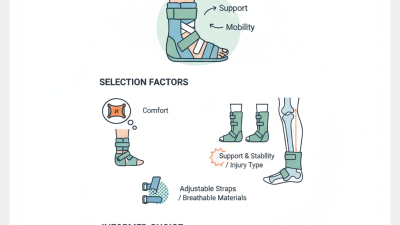
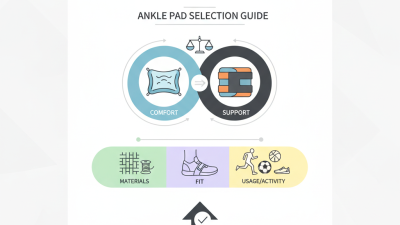
Fit matters greatly. A well-designed boot should support the foot without creating unnecessary pressure. Buyers should examine heel stability, ankle reinforcement, adjustable straps, breathable linings, and outsole grip. A sample worn for several hours can reveal problems that photographs never show. Small details matter.
Materials must be verified.
Reliable suppliers should explain their material specifications, production controls, packaging methods, and quality inspection procedures. Buyers may request samples, factory records, test reports, and traceability documents before placing larger orders. Where orthopedic boots are marketed for medical use, regulatory requirements may differ across countries. Importers should confirm applicable standards with qualified local professionals.
“Best” is not universal. One supplier may offer stronger customization, while another may provide better lead times or lower minimum order quantities. A polished website does not prove factory capability. Conversely, a smaller manufacturer may deliver careful workmanship but lack international logistics experience. This guide therefore considers both strengths and limitations, including communication gaps, inconsistent sizing, and unexpected sample revisions. Those issues are inconvenient, but honest evaluation helps prevent expensive purchasing mistakes and supports safer, more reliable long-term cooperation.
Chinese orthopedic boot suppliers commonly offer several designs for different recovery stages. Tall walking boots stabilize the ankle and lower leg after fractures or ligament injuries. Low-top versions allow easier movement when support is needed around the foot and ankle. Hinged boots add controlled motion during rehabilitation. They can protect healing tissue without locking the joint completely.
Pneumatic air walker boots are another practical option. An internal air bladder can improve comfort and reduce pressure points. Some factories also supply non-pneumatic models for clinics seeking simpler maintenance. Post-operative boots often use lighter shells, adjustable straps, and washable liners. For children, manufacturers may provide smaller sizes, softer padding, and clearer measurement guides. Fit matters. It should never be judged by appearance alone.
In supplier evaluations, I check shell rigidity, hinge performance, strap strength, and liner recovery after repeated use. A useful sample should survive daily fitting, not only look clean in photographs. Chinese factories can support private molds, size grading, color changes, and packaging adjustments. Buyers should request material reports, load testing, and inspection records before volume orders. The heel must sit flat without sliding. No catalog is perfect. Some suppliers describe air systems too broadly, while actual pressure control remains limited. Test samples carefully. Clear specifications can prevent expensive misunderstandings.
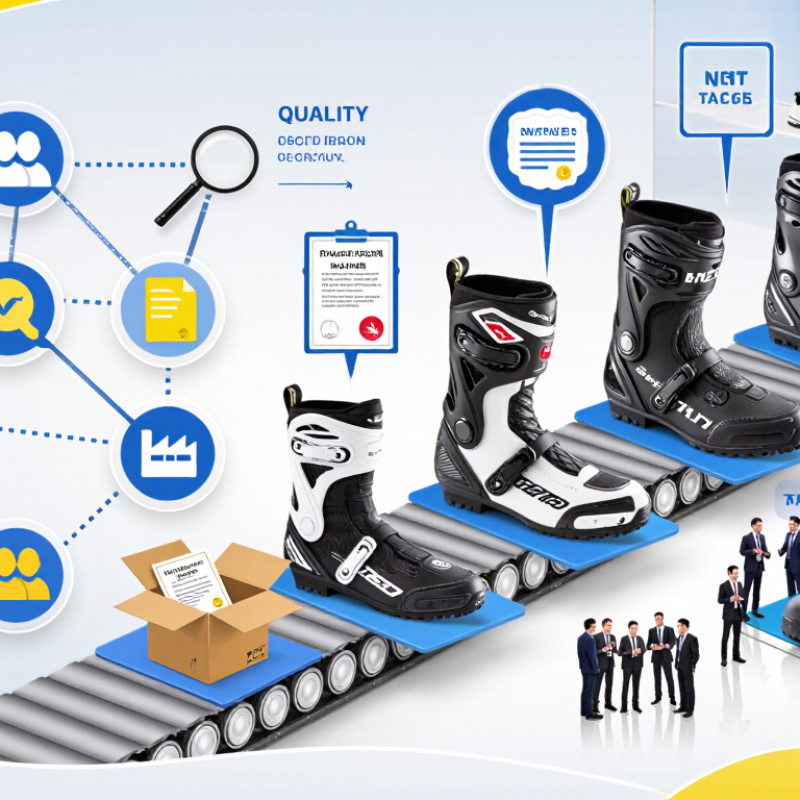
For global buyers, choosing a China-based orthopedic boot supplier requires more than comparing unit prices. A polished website proves little. Request factory registration, quality certificates, product specifications, and recent test reports. Check whether documents match the actual manufacturing site. ISO 13485 may indicate a controlled medical-device quality system, but certification alone is not enough. Confirm its scope, validity, and issuing body. Ask how the supplier manages foam, straps, liners, and molded supports. Clear answers reveal practical expertise.
Ask for evidence.
Evaluate design and clinical-use evidence carefully. The boot should support the intended body area, maintain stable positioning, and allow safe adjustment. Request measurements, durability testing, skin-contact material information, and cleaning instructions. Test the sample. Review walking, fastening, repeated opening, and extended-wear performance. Small details matter, including buckle strength and edge finishing. A sample may look excellent yet fail after several days.
That possibility deserves honest discussion.
Reliable suppliers provide batch records, inspection checkpoints, defect procedures, and traceable packaging labels. Request a pre-shipment inspection plan with measurable limits for size, stitching, alignment, and surface defects. Check communication speed, engineering responses, minimum order terms, and replacement handling. Remote auditing is useful, but independent on-site inspection is stronger for significant orders. Do not accept vague global-compliance claims; requirements differ by destination and product classification.
Buyers sometimes approve a sample without testing final production materials. That mistake is avoidable.
China Best Orthopedic Boots Suppliers for Global Buyers
A reliable supplier proves quality through records, not polished samples. During factory audits, request material specifications, incoming inspection logs, and batch traceability. Check whether foam density, shell thickness, fastener strength, and skin-contact materials match the approved sample. A boot should hold its shape after repeated flexing. Ask for test photos and raw data, not only certificates. ISO’s 2023 survey recorded more than 1.2 million ISO 9001 certificates worldwide, so certification alone cannot prove product quality.
Verify the certificate’s scope, issuing body, expiry date, and factory address. For medical orthopedic boots, review applicable technical documentation, risk analysis, labeling controls, and post-market procedures. Requirements may differ across the European Union, United States, and other markets. A supplier claiming “global compliance” without naming the target market deserves careful questioning. The World Health Organization reported in 2022 that 2.4 billion people may need rehabilitation, increasing pressure for safe, accessible support products.
Manufacturing capability appears in the details. Ask for monthly capacity, mold ownership, production-line photographs, equipment maintenance records, and quality staffing levels. Conduct pre-shipment inspections using agreed sampling rules. Test several sizes, not just one attractive unit. Keep retained samples from each lot. Some factories outsource stitching or packaging without disclosure. That weakness can break traceability. I would also repeat testing after transport simulation, because warehouse heat and compression can change fit. No audit is perfect. Supplier evidence must be refreshed when materials, molds, or subcontractors change.
| Category | Verification Dimension | Relevant Standard or Requirement | What Reliable Evidence Should Show | Recommended Buyer Verification |
|---|---|---|---|---|
| Regulatory Compliance | European market product status | EU Regulation 2017/745 (MDR), where the boot is classified as a medical device | The product classification, intended purpose, technical documentation, risk management, labeling, and conformity assessment route should match the actual product. | Check the Declaration of Conformity, product labeling, instructions for use, UDI information where applicable, and the scope of any notified-body involvement. |
| Regulatory Compliance | United States market access | Applicable U.S. FDA medical-device requirements; registration is not the same as FDA approval or clearance | Documentation should identify the product category, applicable submission or exemption status, establishment registration, and device listing information when required. | Verify information through official regulatory records and confirm that the supplier does not describe registration as product approval. |
| Quality Management | Medical-device quality system | ISO 13485:2016, when applicable to the product and manufacturing scope | The certificate should be current, issued by a qualified certification body, and clearly cover the relevant design, production, or contract-manufacturing activities. | Confirm certificate validity, certificate number, covered site, product scope, and certification-body accreditation or recognition. |
| Quality Management | General manufacturing quality system | ISO 9001:2015 | The certificate should identify the actual production location and describe activities relevant to orthopedic footwear or supportive medical products. | Match the legal entity, factory address, certificate scope, validity dates, and audit status with the supplier’s quotation and factory information. |
| Material Safety | Skin-contact materials and components | ISO 10993 series, when biological evaluation is required for the intended contact and duration | Test reports should identify the exact material, construction, color, adhesive, foam, lining, and other components evaluated. | Request applicable biological-evaluation reports, material specifications, and change-control records for every skin-contact component. |
| Chemical Compliance | Restricted substances for European sales | REACH Regulation (EC) No. 1907/2006, as applicable | Supplier declarations or laboratory reports should address relevant restricted substances in leather, synthetic materials, rubber, dyes, adhesives, and metal parts. | Use recent reports that identify test methods, sample descriptions, testing dates, and the tested product or material batch. |
| Product Performance | Mechanical durability | Documented internal specifications and applicable footwear test methods | Reports should cover sole bonding, flexing, abrasion, stitching strength, closure durability, and resistance of adjustment components. | Review test conditions, sample quantity, acceptance limits, failures, corrective actions, and whether the tested samples represent mass production. |
| Product Performance | Slip resistance and outsole behavior | A documented slip-resistance method suitable for the target market and product design | The report should state the test surface, contaminant, test direction, load, conditioning, coefficient or rating method, and acceptance criteria. | Do not accept a generic “non-slip” claim without a test report tied to the exact outsole compound and tread design. |
| Product Performance | Orthopedic support function | Buyer-defined clinical and functional specifications | Specifications should define heel containment, ankle support, opening dimensions, adjustability, insole structure, range of sizes, and intended user group. | Approve a golden sample, conduct wear trials where appropriate, and compare production samples against approved measurements and fit criteria. |
| Factory Capability | Production process control | Documented SOPs, work instructions, inspection plans, and process-control records | Key processes such as cutting, stitching, molding, bonding, assembly, finishing, cleaning, and packing should have defined controls and acceptance limits. | During an audit, trace one batch from incoming materials through production, inspection, packing, and shipment release. |
| Factory Capability | Incoming material inspection | Approved supplier list and incoming-quality-control procedure | Records should include material identity, color, thickness, hardness where relevant, quantity, supplier lot, inspection results, and disposition of nonconforming materials. | Compare incoming inspection records with purchase specifications and verify segregation of rejected or quarantined materials. |
| Factory Capability | Final inspection and release | Risk-based final inspection and documented shipment-release procedure | Final records should cover appearance, dimensions, size markings, function, packaging, labeling, accessories, quantity, and traceability information. | Define an agreed inspection level and acceptance criteria before production; use independent pre-shipment inspection for higher-risk orders. |
| Traceability | Batch and component traceability | Lot identification and traceability appropriate to product risk | The supplier should be able to connect finished goods with production dates, material lots, operators or lines, inspection records, and shipment documents. | Request a sample traceability exercise and confirm that affected products can be identified during a complaint or recall investigation. |
| Measurement Control | Calibration of inspection equipment | Documented calibration system; ISO/IEC 17025 applies to competent testing and calibration laboratories | Equipment used for dimensional, hardness, force, weight, or other critical measurements should have unique identification, calibration status, due dates, and records. | Inspect calibration certificates and verify traceability to recognized national or international measurement standards where required. |
| Change Management | Control of materials, suppliers, and tooling changes | Documented engineering-change, risk-assessment, and customer-notification procedures | Changes to foam, rubber, adhesives, lining, outsole tooling, dimensions, packaging, or production location should be reviewed before implementation. | Ask for the change-control procedure and confirm that no unapproved substitution is permitted after sample approval. |
| Corrective Action | Complaint and nonconformance management | CAPA process with root-cause analysis and effectiveness verification | Records should show issue classification, containment, root cause, corrective action, responsible personnel, completion date, and follow-up verification. | Review anonymized examples of production defects, customer complaints, and completed corrective actions. |
| Supply Capacity | Production capacity and continuity | Verified capacity based on equipment, staffing, shifts, lead time, and material availability | Capacity information should distinguish prototype, pilot, and mass-production capability and should identify critical outsourced processes. | Validate capacity through production-line observation, recent output records, staffing information, and a written capacity plan for peak demand. |
| Commercial Risk | Sample-to-production consistency | Approved sample, signed specifications, and pre-production approval process | The approved sample should define materials, colors, dimensions, tolerances, packaging, labels, accessories, and functional requirements. | Use a signed specification sheet and retain reference samples from the same production stage before authorizing bulk production. |
| Ethical and Operational Review | Factory identity and manufacturing location | Transparent legal, operational, and site information | The supplier should clearly disclose whether it is a factory, trading company, or hybrid operation and identify the actual site performing production. | Match business-license information, audit address, certification address, bank details, and shipping documents before placing an order. |

China Best Orthopedic Boots Suppliers for Global Buyers
Global buyers should treat samples as a verification stage, not a formality. The World Health Organization reports that more than 2.5 billion people need assistive products worldwide. That figure may exceed 3.5 billion by 2050. Demand is growing, but product fit still decides repeat orders.
Request samples in several sizes. Check heel stability, ankle support, liner thickness, closure strength, and sole grip. Test the boot with a real walking pattern, if appropriate. Record measurements, materials, color codes, and packaging details. A sample can still mislead. It may receive extra inspection before shipment. Ask for a production-equivalent sample and a written approval record.
Pricing should separate materials, labor, tooling, packaging, testing, and shipping. Ask whether the quotation uses EXW, FOB, or another delivery term. Grand View Research identifies steady growth in the global orthopedic devices market, making cost control increasingly important for buyers. However, the lowest quote may hide weaker foam, inconsistent stitching, or limited quality checks. Request a batch inspection plan, defect tolerance, and replacement terms. Production timing depends on material availability, order quantity, and customization. Confirm the pilot schedule before paying a deposit. ISO 13485 certification can support supplier evaluation, but it does not replace buyer-side testing or local regulatory review.
For international buyers, a capable orthopedic boot supplier must manage more than production quality. Export experience matters when cartons face different customs systems, labeling rules, and delivery conditions. Before placing an order, request the HS code, commercial invoice, packing list, certificate of origin, and product specifications. Confirm whether the boot is treated as a medical device in the destination market. Requirements may include local registration, material declarations, language-specific labels, or safety documentation. Never rely on a generic compliance statement.
Shipping details deserve equal attention. Agree on Incoterms, carton dimensions, insurance responsibility, and the customs broker before production starts. Ask for photos of packed cartons, batch numbers, and tracking information. A small labeling error can delay an otherwise complete shipment. Air freight suits urgent samples, while consolidated sea freight can reduce costs for larger orders. Delivery estimates still change. Weather, inspections, and port congestion are real variables.
Tips: Request a pre-shipment inspection and test one carton before full dispatch. Keep written approval for sizes, colors, accessories, and packaging. After-sales support should include a clear warranty period, replacement procedures, and response times. Good suppliers record batch details and investigate complaints with photos or videos. Their solution may be replacement, credit, or technical guidance. No supplier gets every shipment perfect. What matters is transparent correction, documented follow-up, and a willingness to improve recurring issues.
© 2023 Bird & Cronin, LLC. All Rights Reserved.

In observance of the 4th of July holiday, our offices will be closed on July 3rd & 4th.