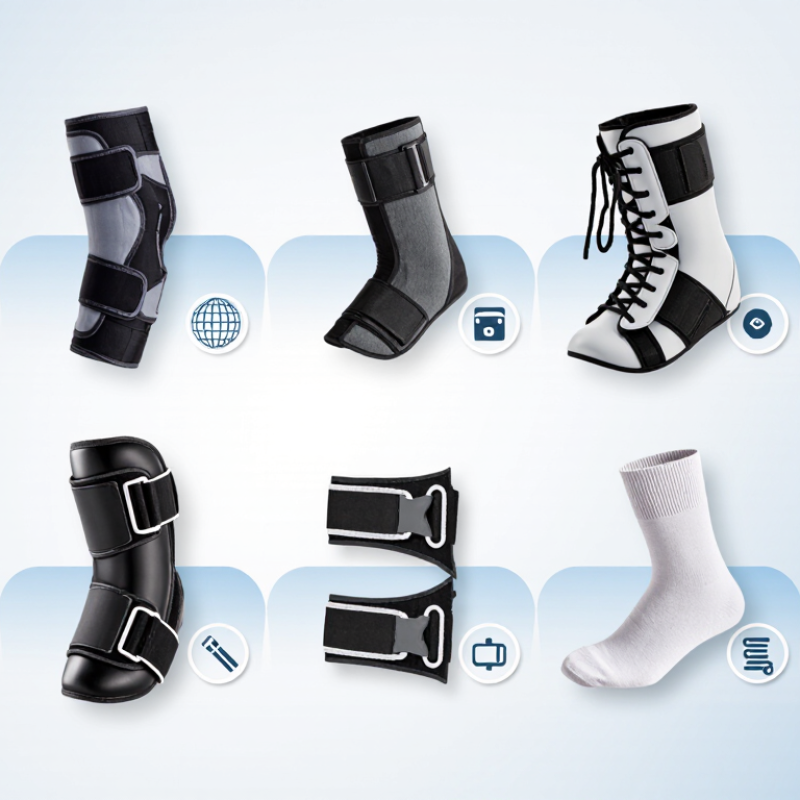
Ankle protection products serve different needs, from added support during training to impact coverage in demanding workplaces. For global buyers, choosing the right item means looking beyond a product photo or a low unit price. Fit matters. So do the activity, the user’s footwear, and the conditions in which the product will be worn. A brace that feels secure in a short fitting may become uncomfortable during a full shift.
This guide introduces ten types of ankle protection products and the details buyers can compare. These include support level, materials, closure design, sizing range, breathability, ease of cleaning, and compatibility with shoes or boots. A padded guard, compression sleeve, and rigid brace are not interchangeable. Each has different limits. Protective gear may help manage exposure to knocks or movement, but it cannot guarantee injury prevention or replace professional advice where needed.
For sourcing, buyers should request clear product specifications, size charts, care instructions, and relevant test documentation. Requirements can vary by market and intended use, so claims and certifications should be checked for each product rather than assumed. Ask about sample availability, packaging, lead times, and consistency between samples and bulk orders. Small details matter. A confusing size label can create avoidable returns. Still, no comparison is perfect: comfort is personal, and product performance depends on proper fit and use. The rankings that follow offer a practical starting point, not a universal verdict.
Ankle protection helps limit excessive rolling, reduce impact, and support balance during movement. It may include supportive footwear, braces, compression sleeves, or protective padding. These products serve athletes, warehouse staff, hikers, and people returning to activity after an ankle injury. The need is practical: uneven ground, quick direction changes, fatigue, and slippery floors can all increase injury risk. A systematic review in Sports Medicine reported about 2 ankle sprains per 1,000 person-years in the general population, with higher rates among sports participants (Doherty et al., 2014). The figure is an average, not a personal prediction. Fit matters.
Common injuries include sprains, in which ligaments stretch or tear, and bruising or fractures after a direct impact or fall. A loose brace can rub the skin; an overly tight one may feel uncomfortable or restrict movement. That detail is easy to overlook. Protection should match the task, shoe, and user’s mobility, rather than simply feeling rigid. People with recurring pain, swelling, or trouble bearing weight should seek assessment from a qualified healthcare professional. Equipment can help manage exposure, but it cannot remove every risk. And sometimes, the fit needs rethinking.
Ankle protection should match the movement, surface, and likely impact—not just the sport’s name. A trail runner crossing loose gravel needs freedom to flex, plus footwear that holds the heel securely. A warehouse worker standing near carts may need toe coverage and a supportive, slip-resistant work shoe. Court players often benefit from stable footwear and, when appropriate, a brace selected with a qualified professional. Fit matters. Pressure points can make even suitable gear distracting.
Assess how often the ankle twists, gets struck, or bears weight on uneven ground. Consider speed, fatigue, weather, and the time spent wearing the product. A lightweight sleeve may offer warmth and mild compression, but it is not equivalent to a rigid brace. Lace-up or semi-rigid supports may limit some motion, though they can feel restrictive and may not suit every task. Details count. Check that straps stay secure and footwear does not rub after several minutes of movement.
Try protective gear during realistic activity, not only while standing in a shop. Walk, turn, and climb a few steps; notice slipping, pinching, or reduced balance. Replace worn soles and damaged supports, and follow the maker’s care instructions. No product prevents every injury. Recurring pain, swelling, or instability deserves assessment by a healthcare professional, rather than a tighter wrap and wishful thinking. Choices can be imperfect; record what feels secure and what interferes, then reassess as the activity or condition changes.
How to assess ankle protection needs by activity and risk
The 1–5 scale indicates relative mechanical support based on product construction, from light compression to more restrictive stabilization. It is a qualitative comparison, not clinical efficacy data. Match support to activity demands, injury history, fit, and professional advice; footwear and braces do not eliminate injury risk.
Global buyers can group ankle protection into ten practical types: compression sleeves, elastic wraps, lace-up braces, semi-rigid stirrup braces, hinged braces, athletic tape, high-top sports footwear, safety boots with supportive collars, shin-and-ankle guards, and pneumatic walking boots. They serve different needs. Sleeves offer light compression, while stirrup and hinged braces limit unwanted side-to-side movement. Walking boots are designed for clinical recovery, not routine sports use.
Fit matters as much as product type. A brace that shifts during a sharp turn may offer little useful support. Check sizing ranges, closure strength, breathability, cleaning instructions, and compatibility with footwear. Safety boots with high collars should not automatically be treated as sprain-control devices. Product claims need scrutiny.
Evidence can guide selection, but it does not promise protection for every user.
In a randomized study of 1,460 high school basketball players, McGuine and colleagues reported 0.47 ankle injuries per 1,000 athlete exposures among braced players, versus 1.41 without braces—a 68% lower rate. The findings appeared in the American Journal of Sports Medicine in 2011.
Buyers should still match the design to activity, injury history, and professional advice.
One gap remains: a brace can feel secure yet still fit poorly.
Choosing ankle protection is less about finding the stiffest product and more about matching support to the task. A 2014 Sports Medicine systematic review estimated 2.15 ankle sprains per 1,000 person-years, showing why fit and intended use deserve attention. Lace-up braces offer adjustable compression for court sports, while semi-rigid designs limit side-to-side movement. Elastic sleeves feel lighter and fit inside many shoes, but provide less mechanical restraint. Taping can be customized, though its support may loosen during activity.
Materials affect comfort as much as protection. Breathable mesh and moisture-wicking liners help during long sessions; reinforced straps can add stability but may create pressure points. Check the product while standing, then walk and make a few sport-specific movements. The heel should stay seated, and the edges should not dig into the skin. A brace can feel reassuring, but it cannot correct every movement problem. That distinction is easy to overlook.
Tips: Compare sizing charts with measured ankle and shoe fit, not just usual clothing size. Try the product with the socks and footwear you plan to use. For persistent pain, swelling, or repeated sprains, seek advice from a qualified health professional before relying on a support product.
Global buyers should compare ankle braces, protective sleeves, padded guards, and ankle-supporting workwear by intended use. A brace for repeated court movement needs different flexibility from a guard worn inside a safety shoe. Ask suppliers which materials contact skin, how seams are finished, and whether closures stay secure after repeated use. Fit changes everything.
Standards depend on product type, destination, and claimed protection. Request current test reports and confirm that the tested model matches the offered product, including materials and construction. Check labeling, care instructions, and traceability records before approving a shipment. Ask for evidence. A certificate alone may not show how the product performs after washing or daily wear.
Sizing deserves hands-on review. Request measurement guides, sample sets, and size-level tolerances, then test them on users with different ankle shapes and sock thicknesses. Charts look tidy; real ankles vary. Compare sample fit with the stated size range, and record pressure points or slipping during movement. Supplier selection should also consider production capacity, quality checks, lead times, and clear defect-handling terms. One detail is easy to miss: a small change in elastic tension can alter both comfort and support, so confirm approved specifications before repeat orders.
A practical, brand-neutral sourcing comparison. Product specifications and size ranges vary by model and supplier; verify the exact item before ordering.
| # | Product Type | Typical Application | Ankle Protection Features | Relevant Standards or Verification | Typical Sizing Approach | Key Supplier Checks |
|---|---|---|---|---|---|---|
| 1 | Motorcycle touring boots | Road touring and everyday motorcycle use | Higher-cut shaft; reinforced ankle zones; abrasion-resistant outer materials; closure that secures the foot and lower leg | For protective motorcycle footwear in the EU, check conformity with EN 13634 and request the applicable test documentation and marking for the exact model. | Usually listed in EU, UK, and US sizes. Request a foot-length-in-millimetres chart and guidance on calf circumference. | Confirm test scope, material construction, closure durability, water-resistance claims, and whether replacement parts are available. |
| 2 | Short motorcycle boots | Urban riding and commuting | Ankle-height or slightly higher construction; local reinforcement may be provided around the ankle and heel | Check EN 13634 documentation where EU motorcycle protective-footwear conformity is claimed. Do not infer protection from appearance or shaft height alone. | Request measured insole length by size; confirm whether the fit accommodates riding socks. | Inspect ankle coverage, retention during movement, outsole grip, seam placement, and model-specific test reports. |
| 3 | Protective safety boots | Construction, manufacturing, logistics, and other workplace settings | Higher-cut upper can provide coverage; impact protection at the toe does not automatically mean the ankle is protected | For EU safety footwear, verify the applicable EN ISO 20345 edition and product marking. For the US, check the claimed ASTM F2413 requirements and marking. Confirm whether ankle protection is specifically tested or claimed. | Often offered in regional shoe sizes and multiple widths. Ask for a size chart based on foot length and width. | Verify the required safety features for the job, test certificates, sole properties, upper height, and any separate ankle-protection evidence. |
| 4 | Hiking boots with ankle-height uppers | Hiking, trekking, and outdoor work on uneven terrain | Higher collar and lacing may help secure the foot; ankle-height design alone is not proof of injury prevention | There is no single universal ankle-protection certification for all hiking boots. Review the intended-use claims and request substantiation for any protective-performance claim. | Ask for foot-length measurements, width options, and fit guidance for thicker hiking socks. | Check upper support, heel hold, outsole traction, flex characteristics, water-resistance test method, and wear-test results. |
| 5 | Lace-up ankle support brace | Sports and general ankle support, subject to the product’s intended use | Adjustable compression and lacing; some models include side stays or figure-eight straps | Medical-device rules depend on the market and the product’s intended claims. Request applicable registration or conformity documents where required; do not treat a brace as a substitute for clinical advice. | Commonly sized by shoe size or ankle circumference. Request measurement instructions and a size chart. | Check intended-use labeling, materials, skin-contact documentation, closure-cycle durability, and instructions for cleaning and use. |
| 6 | Stirrup-style ankle brace | Sports use where lateral ankle support is desired | Semi-rigid side shells or stays with straps designed to limit some side-to-side movement | Requirements depend on market and claims. Request product-specific test evidence and any required market authorization; avoid unsupported injury-prevention claims. | Often offered in several size bands; check compatibility with the user’s footwear and measure as instructed by the supplier. | Evaluate shell stiffness, strap security, comfort in shoes, left/right options, and wear testing under the intended activity. |
| 7 | Compression ankle sleeve | Light support during training or daily activity | Elastic fabric provides compression and warmth; generally offers less mechanical restraint than a rigid or strapped brace | No universal ankle-protection standard applies to all compression sleeves. Verify any medical or performance claims against applicable local rules. | Usually based on ankle or foot circumference. Request the exact measurement points and fabric stretch range. | Check fiber composition, seam comfort, compression consistency, wash durability, and labeling for size and care. |
| 8 | Snowboard or ski boots with ankle-support construction | Snow sports and cold-weather use | Structured shell or liner, secure closure, and heel retention; support varies by design and fit | Verify applicable product-safety requirements for the destination market. Do not assume that boot construction alone certifies ankle-injury protection. | Ask for foot-length sizing, liner-fit guidance, and available width or volume options; confirm fit with intended socks. | Review closure retention, liner compression, cold-temperature performance, sole compatibility, and product-specific safety documentation. |
| 9 | Ankle guards for contact or field sports | Sports where impact or contact around the ankle is a concern | May use padded panels, shells, or sleeves; coverage and impact absorption differ substantially between models | No single global standard covers every sport ankle guard. Request test methods and evidence supporting any stated impact-protection level. | May be sized by shoe size, ankle circumference, or both. Confirm fit over or under the intended socks and footwear. | Check coverage area, padding retention, impact-test reports, ventilation, movement restriction, and sport-specific rules. |
| 10 | Protective gaiters or lower-leg guards with ankle coverage | Outdoor work, brush exposure, or selected industrial tasks | External coverage may help shield the ankle and lower leg from debris or abrasion; protection depends on material and closure design | Confirm the product is tested for the specific hazard claimed. General clothing or gaiter standards do not automatically demonstrate impact protection for the ankle. | Typically sized by footwear size and leg circumference. Request measurements over the intended boots or trousers. | Check coverage overlap, closure security, abrasion or cut-test evidence where relevant, and compatibility with required footwear. |

Global sourcing note: Shoe-size conversions between EU, UK, and US systems are not perfectly uniform. Use measured foot length in millimetres as a comparison point, and confirm the supplier’s own chart, tolerances, labeling, destination-market requirements, test reports, and intended-use claims before approving samples or bulk production.
© 2023 Bird & Cronin, LLC. All Rights Reserved.

In observance of the 4th of July holiday, our offices will be closed on July 3rd & 4th.