How to Choose the Right Walker Boot for Your Recovery Needs?
When it comes to recovery, choosing the right walker boot is critical. Dr. Emily Carter, a leading podiatrist, emphasizes, "A proper walker boot can significantly enhance your healing process." This statement highlights the importance of understanding your specific needs.
Walker boots come in different styles and levels of support. The selection often feels overwhelming. Factors such as injury type, comfort, and fit can influence your choice. Consideration of these elements can aid in making a suitable selection. For instance, a well-fitted walker boot reduces pain during movement.
However, it’s not always straightforward. Some individuals find themselves in the wrong size or type. This can prolong recovery instead of facilitating it. Assessing your situation and consulting a healthcare professional is vital. Overall, making an informed choice about a walker boot can pave the way for a smoother recovery.
What is a Walker Boot and Its Purpose in Injury Recovery?
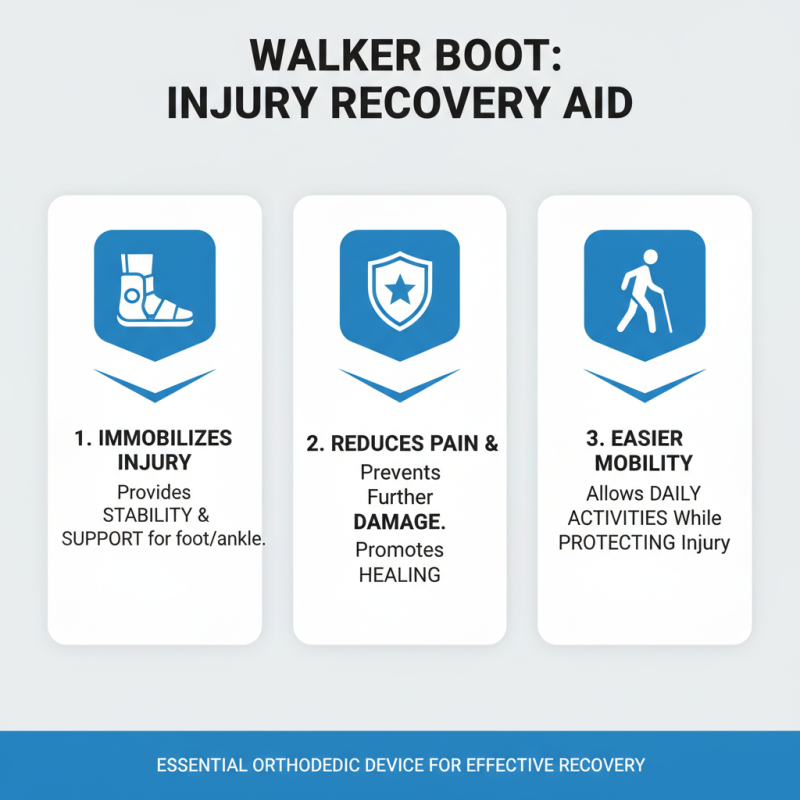
A walker boot is a special orthopedic device designed to assist individuals during their recovery from foot or ankle injuries. Its primary function is to immobilize the injured area, providing both stability and support. This boot is essential for reducing pain and preventing further damage while allowing healing to occur effectively. Users often report that wearing a walker boot eases their daily activities, enabling mobility while protecting their injury.
Choosing the right walker boot involves considering several factors. Patients should assess the level of support they need based on the severity of their injury. The size and fit of the boot are crucial, ensuring comfort and adequate immobilization. Materials from which the boot is made can also influence effectiveness. Some boots are lightweight, enhancing mobility. Others may offer additional cushioning for greater comfort during extended wear.
It’s important to acknowledge that not every boot will suit every individual. Personal experiences vary significantly, and what works for one person may not work for another. Consulting with a healthcare professional can help clarify doubts about the proper walker boot. Feedback from others who have faced similar injuries can also serve as valuable insight. Ultimately, finding the right boot is a journey that may involve some trial and error.
Key Features to Consider When Selecting a Walker Boot
Choosing the right walker boot can significantly impact your recovery process. When selecting a walker boot, consider the fit first. A poorly fitting boot can cause discomfort and hinder healing. Data from the National Institutes of Health shows that up to 30% of patients experience complications due to improper footwear choices. Aim for a snug fit without restricting circulation.
Next, keep an eye on the padding. Adequate padding offers comfort during prolonged wear. Research indicates that patients using well-padded boots are 40% more likely to report satisfaction with their recovery. Check the material used as well. Lightweight materials help ease fatigue, while sturdy constructions provide needed support.
Don't overlook the adjustable features. Adjustable straps can accommodate swelling, which is common during recovery. Flexibility in sizing is essential. A study published in the Journal of Foot and Ankle Surgery highlights that adjustable walker boots result in a 25% reduction in recovery time. Reflect on your unique situation. Recovery can be unpredictable, and finding the right walker boot is a key part of your healing journey.
Walker Boot Selection: Key Features Comparison
Comparing Different Types of Walker Boots: Rigid vs. Soft Designs
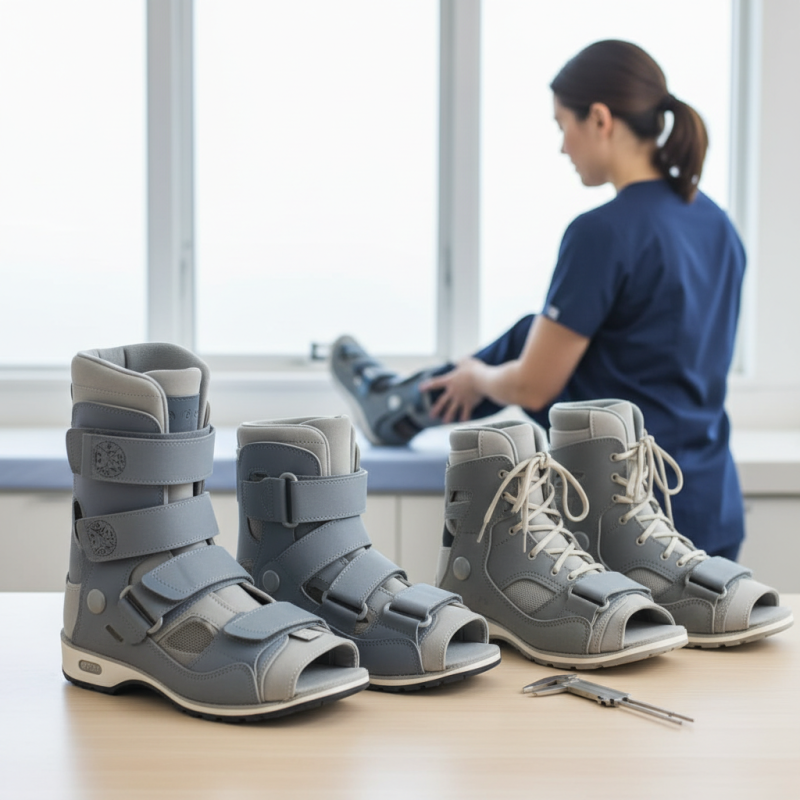
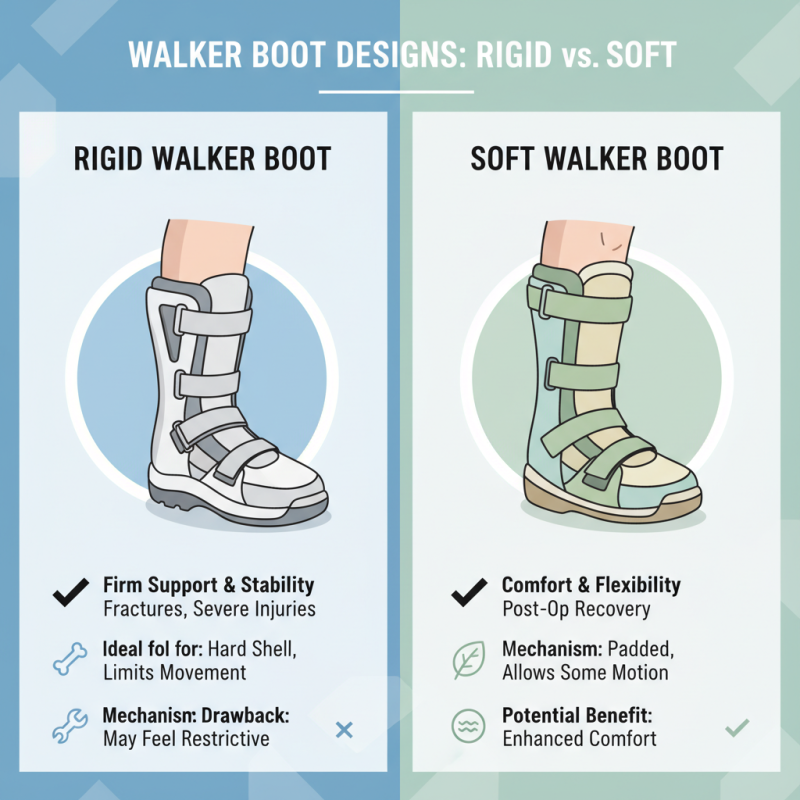
When selecting a walker boot, it’s important to weigh the differences between rigid and soft designs. Rigid walker boots offer firm support and stability. They are ideal for fractures or severe injuries. These boots typically have a hard shell, preventing excessive movement of the foot and ankle. This can be beneficial for your healing process but may feel restrictive.
In contrast, soft walker boots are more flexible and lightweight. They provide adaptability while still offering some support. This design might be suitable for minor injuries or post-surgery recovery. Many users appreciate the comfort of soft boots, but they may not provide enough immobilization for serious conditions.
Choosing the right type often requires careful consideration. You might feel tempted to opt for what looks comfortable. However, comfort should not outweigh the need for proper support. Reflect on your specific recovery needs. Consulting with a healthcare professional can also guide your decision. Each individual's situation is unique, and the right choice can make a significant impact on recovery.
How to Determine the Right Size for Your Walker Boot
Choosing the right size for a walker boot is crucial for optimal recovery. An ill-fitting boot can impede healing and even worsen an injury. The right size ensures proper alignment and support during the healing process.
To determine the ideal size, start by measuring the width and length of your foot. Consider using a measuring tape or a ruler. The average adult foot length ranges from 9 to 12 inches. Also, foot width can vary, with average widths being around 3 to 4 inches. According to a study by the American Orthopaedic Foot & Ankle Society, 70% of patients experienced better comfort with correctly sized footwear.
When selecting a walker boot, pay attention to the sizing charts. These charts often provide valuable details that align foot measurements with appropriate boot sizes. It's not uncommon for individuals to fall between sizes, leading to confusion. ideally, you want the boot to fit snugly but not restrict blood flow. Additionally, ensure there's enough room for any orthotics you may need to use.
Regularly check for signs of pressure sores, which can indicate poor fit. Each recovery journey is unique; what works for one person may not be suitable for another. Adjustments may be necessary as you heal.
Common Mistakes to Avoid When Using a Walker Boot for Recovery
Using a walker boot can be crucial for recovery after an injury. However, there are common mistakes to watch out for. Many people rush to put on the boot without adjusting it properly. This can lead to discomfort or worse, further injury. Ensure that the straps are secure, but not too tight. It’s essential to find that balance for optimal support.
Another mistake is neglecting to adjust the walking pace. Users often hurry while trying to walk with the boot. This can cause instability and increase the risk of falling. Take it slow, particularly in the early stages. It is also vital to pay attention to surfaces. Uneven terrain can pose a challenge. Always aim for flat areas until you regain confidence and strength.
Finally, forgetting to take breaks can hinder recovery. Prolonged use without rest may cause fatigue and delays healing. Listen to your body. If you feel discomfort, take a moment to sit and relax. Recovery is a process—it’s important to engage with it thoughtfully.