Why Choose Welded Wire Mesh for Your Projects?
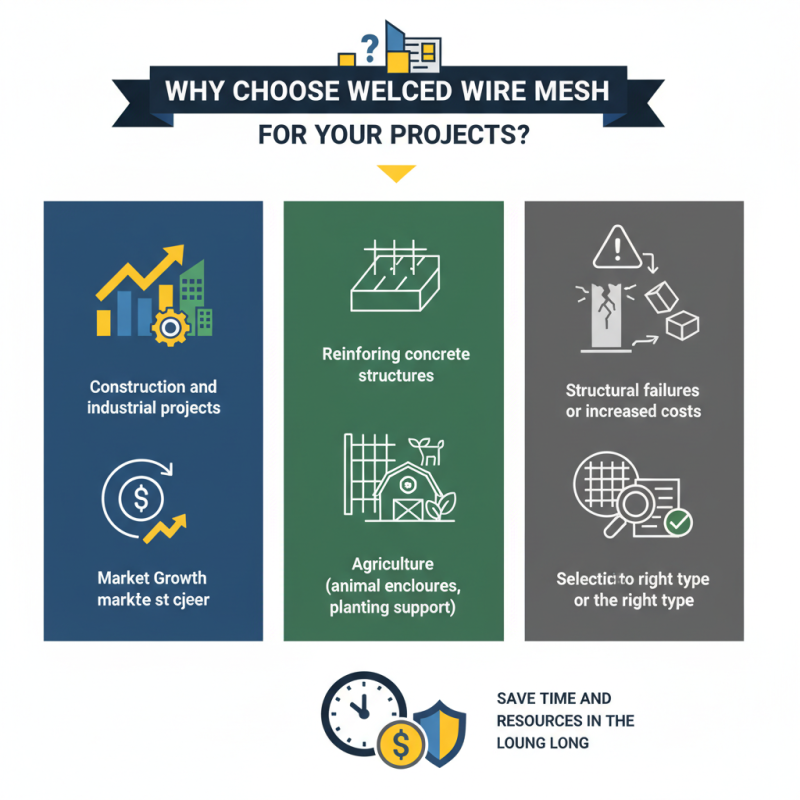
welded wire mesh is gaining attention in construction and industrial projects. This material offers a unique combination of strength, versatility, and cost-effectiveness. According to industry reports, the global welded wire mesh market is poised to grow significantly, driven by rising demand from various sectors. In fact, the market is projected to reach $4.5 billion by 2025, reflecting a CAGR of 6.2%.
The applications of welded wire mesh are diverse. From reinforcing concrete structures to creating secure fencing solutions, its adaptability is undeniable. It is also commonly used in agriculture for animal enclosures and planting support. However, some projects might overlook the specific requirements for welded wire mesh installation. If the mesh isn’t selected or installed correctly, it may lead to structural failures or increased costs.
Reflecting on these insights is crucial. While welded wire mesh holds great promise, understanding its limitations and proper usage is essential. Quality standards in manufacturing vary. Selecting the right type for your specific needs is vital for project success. The investment in proper welded wire mesh can save time and resources in the long run.
Understanding Welded Wire Mesh: Composition and Manufacturing Process
Welded wire mesh is a popular choice in construction and various projects due to its unique composition and manufacturing process. Made from high-quality steel wires, it offers strength and durability. The wires are arranged in a grid pattern, then welded at each intersection, creating a stable structure. This method ensures the mesh can withstand significant tension and impacts.
According to industry data, the welded wire mesh market is expected to grow by 6% annually. This growth is driven by the increasing demand in the construction industry. In fact, 47% of construction professionals cite welded wire mesh as vital for reinforcing concrete. However, there are challenges. Ensuring uniformity in wire thickness and weld strength can be tricky. Quality control is essential. Inadequate testing may lead to structural failures, which can have serious consequences.
The manufacturing process involves precision machinery that cuts and welds wire to specified dimensions. This technology enhances efficiency. Yet, it requires regular maintenance to avoid breakdowns. If not properly managed, the production can lag, affecting project timelines. Many projects utilizing welded wire mesh have reported success, but they also highlight the need for ongoing improvement in techniques and materials, emphasizing the balance between innovation and reliability.
Key Advantages of Using Welded Wire Mesh in Construction Projects
Welded wire mesh is gaining popularity in construction projects. It offers several key advantages that make it an excellent choice for builders and architects. One major benefit is its strength. The mesh is made of welded wires that create a robust structure. This durability helps prevent cracks and breaks in concrete. Projects that utilize this material often see fewer repairs in the long run.
Another advantage is the ease of installation. Welded wire mesh is lightweight and can be handled more easily than traditional reinforcement methods. Workers appreciate how quickly the mesh can be laid out and secured. This allows for faster project completion times, which is especially important in tight schedules. However, not every project may benefit equally.
Some may find that certain designs limit the effectiveness of welded wire mesh. In situations requiring specific load distributions, other types of reinforcement might be necessary. It’s essential to assess the project's unique needs. While many enjoy the benefits of welded wire mesh, it's vital to reflect on whether it's the best option for each specific application.
Applications of Welded Wire Mesh in Various Industries
Welded wire mesh has become a staple in various industries. Its strong, versatile design makes it ideal for many applications. In construction, it enhances structural integrity. According to industry reports, welded wire mesh can reduce concrete cracking by up to 40%. This is critical for long-lasting structures.
In agriculture, farmers rely on welded wire mesh for fencing. It helps protect crops from pests and livestock. A study showed that farms with proper fencing saw a 20% increase in yield. Additionally, it is used in greenhouse construction. The mesh allows sunlight and air to reach plants, promoting better growth.
Welded wire mesh also finds its place in industrial settings. Factories use it for safety barriers to protect workers from hazardous areas. Reports indicate that such safety measures can decrease accidents by about 25%. Despite its many applications, some argue that improper installation leads to issues. Ensuring the right mesh type is vital. Without attention to detail, the benefits may not be fully realized.
Why Choose Welded Wire Mesh for Your Projects? - Applications of Welded Wire Mesh in Various Industries
| Industry | Application | Material Type | Benefits |
| Construction | Reinforcement in concrete | Galvanized steel | Enhanced strength and stability |
| Agriculture | Animal enclosures | Stainless steel | Durability and resistance to corrosion |
| Manufacturing | Workplace partitions | Mild steel | Cost-effective and functional |
| Transportation | Highway safety barriers | Coated wire | Enhanced visibility and strength |
| Retail | Display units | Powder-coated steel | Aesthetic appeal and durability |
Comparing Welded Wire Mesh to Other Types of Mesh Products
Welded wire mesh stands out in the construction and agricultural sectors. Its structural integrity is superior when compared to alternatives like chain link or woven wire. Reports from the Wire Reinforcement Institute indicate that welded wire mesh can withstand greater tensile strength. This leads to fewer failures and increased longevity in various applications.
In contrast, woven wire mesh can easily become deformed under pressure. Its flexible nature limits its use in demanding structural applications. A recent industry survey highlighted that over 30% of projects using woven mesh required rework due to failure. Welded wire mesh minimizes this risk, proving to be the more reliable option.
However, it's not without flaws. Welded wire mesh can be costly upfront, and sourcing high-quality materials is sometimes challenging. In some projects, the rigidness of welded mesh could complicate installation, especially in irregular landscapes. Users must weigh these factors against its benefits. Efficient project planning and material cost assessment are crucial for successful outcomes.
Cost-Effectiveness and Longevity of Welded Wire Mesh Solutions
When considering cost-effectiveness, welded wire mesh stands out in the construction and manufacturing industries. According to a report from the Wire Mesh Manufacturers Association, welded wire mesh can reduce labor costs by up to 30% compared to traditional materials. This is due to its ease of installation and strength, which minimizes the time spent on site. Additionally, the mesh is made from galvanized steel, which provides a long-lasting solution that resists corrosion. This durability often leads to a longer lifespan, allowing projects to avoid frequent replacements.
Longevity is another prime reason for choosing welded wire mesh. Studies indicate that welded wire mesh installations can last over 50 years with proper maintenance. This performance reduces waste and contributes to a sustainable project lifecycle. In contrast, alternative materials often deteriorate more quickly, requiring costly repairs or replacements. While some may question the initial investment, the long-term savings from fewer replacements and repairs make welded wire mesh a wise choice.
Nevertheless, it’s crucial to recognize that not all projects may benefit equally from welded wire mesh. The specific application and environmental factors play significant roles in the overall effectiveness. Some projects may require custom solutions that could lead to comparable costs in the short term. Balancing initial costs with potential long-term benefits is vital for a wise decision.