
Why Choose Blue Light Therapy for Your Business?

Why Choose Blue Light Therapy for Your Business?

Blue Light Therapy is moving from specialist clinics into dermatology practices, beauty studios, and wellness centers. The opportunity is visible, but it requires disciplined positioning. Clients now expect evidence, safety information, and measurable service quality.

Industry reports indicate steady commercial growth. Grand View Research identifies LED light therapy as an expanding global market, supported by non-invasive skincare demand and improving device access. Fortune Business Insights also forecasts substantial growth through the next decade. However, these reports measure different product categories. Their figures should guide planning, not guarantee revenue.

Clinical credibility matters more than optimistic forecasts. The American Academy of Dermatology recognizes visible light as a possible acne treatment option, particularly under professional guidance. Research also suggests that blue wavelengths may reduce acne-related bacteria and inflammation. Results vary by skin condition, device power, treatment schedule, and client adherence. The evidence is promising, not perfect.

That distinction protects your reputation.

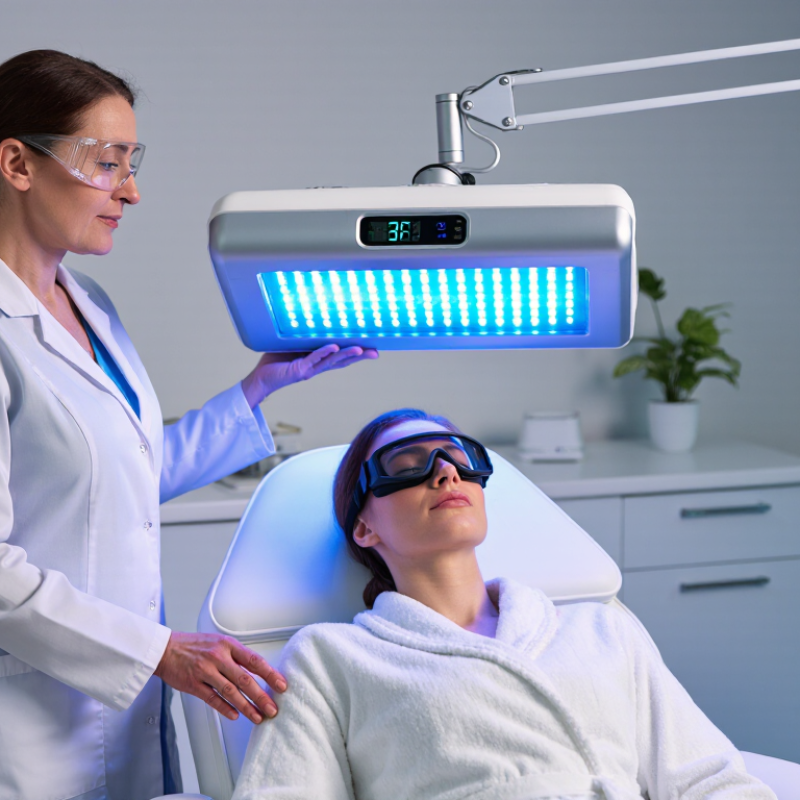
A credible business can offer documented consultations, trained operators, and clear aftercare instructions. It can record treatment dates, skin responses, and client feedback. A clean treatment room, protective eyewear, and calibrated equipment also create visible trust. These details matter when a client sits beneath a cool blue panel for ten minutes.

Do not promise instant transformation. That approach may attract attention briefly, but it weakens long-term confidence. Position Blue Light Therapy as a professional, non-invasive service supported by realistic expectations and responsible screening. Review manufacturer instructions and applicable local regulations before launch. With careful training and honest communication, the service can complement existing skincare offerings while building stronger client relationships.
Why Choose Blue Light Therapy for Your Business?

What Is Blue Light Therapy and How Does It Work?

What Is Blue Light Therapy and How Does It Work?

Blue light therapy uses visible light, commonly near 415 nanometres, to target acne-related bacteria on the skin’s surface. The light activates bacterial porphyrins, creating reactive oxygen that can reduce Cutibacterium acnes. It does not scrub pores or deeply reach cysts. The American Academy of Dermatology reports that acne affects up to 50 million Americans annually, creating demand for practical, non-invasive care.

Evidence remains useful but imperfect. A systematic review in Photodermatology, Photoimmunology & Photomedicine found that blue-light studies often reported improved acne lesions, but many included small samples and short follow-up periods. The AAD also explains that visible-light treatments may help some inflammatory acne, while results vary by skin type, acne severity, and treatment consistency. Businesses should avoid promising clear skin for everyone. That would be careless.

Tips: Use professionally assessed devices with documented wavelength and safety controls. Protect the eyes as directed. Track redness, lesion counts, and irritation with consistent photographs. Explain that blue light may not address blackheads, whiteheads, or deep nodules. A qualified skin professional should review persistent or worsening symptoms. Good service includes honest limits.

Why Choose Blue Light Therapy for Your Business? - What Is Blue Light Therapy and How Does It Work?

Data Dimension Relevant Data What It Means for a Business
Definition Blue light therapy uses controlled exposure to visible blue wavelengths, commonly within approximately 400–500 nanometers (nm). It can be positioned as a non-invasive service that uses light rather than injections, peeling agents, or systemic medication.
Primary biological target For acne-related applications, blue light can activate porphyrins produced by Cutibacterium acnes, generating reactive oxygen species that may reduce bacterial activity. The mechanism provides a science-based explanation for acne-focused facial, dermatology, and aesthetic services without making claims of guaranteed results.
Visible wavelength range Blue light is generally perceived within the visible spectrum; the human eye is most sensitive near 555 nm, while shorter blue wavelengths carry higher photon energy. Equipment selection should specify wavelength, irradiance, treatment distance, and exposure time rather than relying only on the term “blue light.”
Common professional use Acne-prone skin is the most established cosmetic and dermatological use case for blue-light devices. Suitable businesses may include dermatology practices, aesthetic clinics, spas with qualified staff, and wellness centers operating within local regulations.
Treatment experience Blue-light sessions are typically described as non-invasive and may involve little or no downtime, although warmth, temporary redness, dryness, or irritation can occur. A low-downtime format can support appointment-based services and add-on treatments, subject to appropriate screening and professional protocols.
Expected treatment pattern Visible improvement, when it occurs, generally requires a series of sessions and consistent aftercare; response varies by person and condition. Businesses can design structured consultation, session, and follow-up packages instead of presenting the service as a one-time cure.
Evidence considerations Clinical outcomes depend on wavelength, dose, device design, treatment schedule, skin condition, and study quality. Evidence is stronger for some acne applications than for broad anti-aging claims. Marketing should use condition-specific, evidence-based language and avoid promising permanent, universal, or immediate results.
Key safety requirement Eye protection and adherence to the device instructions are important because intense visible light can create eye discomfort or risk, especially with direct exposure. A documented operating procedure should include eye protection, exposure limits, staff training, cleaning, and incident reporting.
Client screening Screen for photosensitivity, light-sensitive medicines, relevant eye conditions, active skin problems, and other contraindications listed by the device manufacturer or medical professional. Pre-treatment screening helps reduce avoidable risks and supports responsible service delivery.
Operational requirements Important specifications include wavelength, irradiance, treatment area, timer controls, protective equipment, cleaning requirements, and electrical safety information. Transparent specifications make staff training, purchasing comparisons, maintenance, and client communication easier.
Service differentiation The service can complement consultation, cleansing, topical skincare, or other professionally appropriate treatments; compatibility depends on the individual client and protocol. A business can create a more complete client journey while keeping treatment claims clear and appropriately limited.
Regulatory positioning Device classification, advertising rules, staff qualifications, and permitted claims vary by country and intended use. Before launch, verify local regulatory requirements and ensure that the device, training, consent forms, and promotional language match the approved use.

Note: Blue light therapy is not suitable for every person or condition. Professional assessment, device instructions, appropriate eye protection, and compliance with local regulations are essential.


Which Business Applications Benefit from Blue Light Therapy?

Blue light therapy can serve businesses that need a measured, non-invasive service. Dermatology and aesthetic clinics commonly use specific blue wavelengths as an adjunct for mild acne. A client may sit beneath a shielded panel for several minutes, following a documented schedule. Results vary. Skin type, treatment frequency, photosensitising medicines, and diagnosis all matter. A trained professional should screen clients and explain that light therapy is not a universal replacement for medical care.

Wellness practices may also explore blue light for daytime alertness and circadian support. This application needs careful timing, not simply brighter light. Offices, sleep clinics, and workplace wellness programs could offer supervised morning sessions, especially for people with irregular schedules. However, evidence differs by condition and device. Eye protection, exposure limits, and contraindication checks deserve written procedures. A quiet room and clear consent can improve the experience, but comfort is not proof of effectiveness.

Veterinary practices may investigate targeted use for selected skin concerns, with an animal health professional directing every session. Businesses should record wavelength, dose, duration, skin response, and follow-up comments. That record supports safer decisions and more credible client education. Marketing should avoid guaranteed outcomes. Some customers will want instant change; the honest answer may disappoint them. That honesty is a weakness in sales, perhaps, but a strength in professional trust. Independent clinical guidance remains important when symptoms persist or worsen.

What Are the Main Benefits for Businesses and Customers?

Why Choose Blue Light Therapy for Your Business?

Blue light therapy can give businesses a practical addition to wellness or skincare services. Customers often appreciate sessions that are brief, quiet, and easy to fit into busy schedules. A typical appointment may involve a clean treatment area, protective eyewear, and a device positioned at a measured distance. These details help create a professional experience.

For businesses, the main benefit is service flexibility. Staff can offer scheduled sessions without complex preparation or extensive recovery time. Clear procedures may also improve consistency between appointments. Training matters, though. Employees should understand approved settings, treatment limits, contraindications, and basic hygiene. They should never promise guaranteed results. Evidence supports some uses, such as helping manage mild acne, but outcomes vary between individuals.

Customers benefit from a non-invasive option that does not usually require downtime. Some may notice calmer-looking skin over several sessions, while others may see little change. That honest difference deserves attention. Blue light is not a miracle service. Businesses should screen customers for photosensitivity, medication concerns, eye conditions, and other relevant risks. They should also follow local safety requirements and keep treatment records.

The commercial value depends on trust. Transparent consent forms, realistic explanations, and qualified oversight can strengthen customer confidence. Poor communication can weaken it quickly. A business may also review feedback, retention rates, and reported discomfort before expanding the service. This approach is less dramatic, but more reliable.

Why Choose Blue Light Therapy for Your Business?

Evidence-based indicators showing why blue light therapy can create value for both businesses and customers.

Visible blue-light systems are non-invasive and can be designed without ultraviolet exposure. Published acne-treatment studies commonly report approximately 60–70% lesion reduction after a treatment course; the chart uses the midpoint of that range. Treatment protocols often fit within 15–30 minutes, supporting convenient scheduling and repeat customer visits. Results vary by device, protocol, skin condition, and customer.

References: American Academy of Dermatology Association, “Acne: Diagnosis and treatment”; Dawe RS, “Ultraviolet A1 phototherapy,” British Journal of Dermatology; published clinical literature on blue-light acne phototherapy.

How Should Businesses Evaluate Blue Light Therapy Options?

Choosing blue light therapy for a business requires more than comparing prices. Operators should evaluate the device, evidence, and intended users. Ask which wavelengths it delivers and whether independent testing confirms them. Irradiance matters too, because treatment time depends on the light’s measured intensity. Request laboratory reports, user instructions, warranty terms, and maintenance requirements. Clear documentation signals responsible development, not just attractive marketing. A qualified healthcare professional should review proposed uses, especially when clients have photosensitive conditions or take light-sensitive medication. Eye protection and staff training should be practical, visible, and consistent.

Tips: Compare measured performance, not advertised brightness. Check cleaning procedures and replacement costs. Ask how staff will record sessions and respond to discomfort. Visit a demonstration site if possible. A quiet room, adjustable settings, and simple controls can improve daily operations. Still, convenience should never replace safety.

Business owners should also examine published research and the limits of its findings. Evidence may support specific applications, but it may not apply to every customer or treatment goal. I would avoid promises based on testimonials alone. They can be useful, but they are not reliable clinical proof. Consider consultation workflows, informed consent, privacy, and local regulatory requirements. A less expensive unit may create higher costs through poor training or frequent repairs. I have found that small operational details often reveal the real value. Yet every business should test its assumptions before investing heavily.

What Safety, Cost, and Compliance Factors Should Businesses Consider?

Blue light therapy can look simple, but business risks rarely are. Safety begins with the intended use, not attractive wavelength claims. A dermatology service, wellness room, and workplace device require different controls. IEC 62471 evaluates photobiological risks from lamps, including retinal and skin exposure. ICNIRP guidance considers wavelength, irradiance, distance, and exposure time. Ask for spectral tests, irradiance maps, timer accuracy, shielding data, and cleaning instructions. Keep treatment records and incident logs. A trained clinician should review photosensitizing medicines and existing eye conditions. Some users report dryness or headaches. Do not dismiss them. That gap matters.

Cost planning needs more than the purchase price. The U.S. Department of Energy reports that LED products use at least 75% less energy and last up to 25 times longer than incandescent products. Therapy equipment still needs nameplate verification. A 60-watt unit used eight hours daily for 300 days consumes 144 kilowatt-hours annually. Labor, calibration, maintenance, insurance, and staff training may cost more. Compliance is claim-dependent. In the United States, a device marketed to treat disease may require applicable FDA authorization. Cosmetic wording does not remove safety duties. Other markets differ, so document the target location, claims, consent process, and complaint handling. Sales staff should avoid promises of cures or guaranteed results. I would not approve a device before reviewing independent test records. A cheaper unit can become expensive when evidence is missing.

In observance of the 4th of July holiday, our offices will be closed on July 3rd & 4th.