
Why Choose a China Waterproof Surgical Bandage Manufacturer?
Choosing a Waterproof Surgical Bandages Manufacturer China can strengthen supply reliability, product consistency, and cost control. Experienced factories often combine automated coating lines with skilled manual inspection. You may see silicone release liners, sealed pouches, and adhesive samples tested under controlled humidity. These details matter when a dressing must remain secure during bathing, movement, or light clinical activity.
Dr. Elaine Tan, an independent medical-device quality consultant, states, “A surgical bandage earns trust when its protection remains consistent after production.” Her point is practical. A reputable manufacturer should demonstrate documented quality systems, traceable materials, and repeatable testing. ISO 13485 certification can support confidence, but certification alone is not enough. Buyers should review audit records, technical files, stability data, and packaging performance. Ask difficult questions.
China also offers broad manufacturing capacity. Suppliers can develop transparent films, breathable nonwoven backings, customized dimensions, and private-label packaging. Their engineering teams may adjust adhesive strength for sensitive skin or different application areas. Faster sampling is another advantage. Still, lower pricing should never replace clinical suitability or quality verification.
No supplier is perfect.
Small gaps can appear. A batch may show uneven edges, weak seals, or inconsistent adhesion. Careful buyers recognize these risks early. They request pre-production samples, independent inspections, and clear corrective-action procedures. Communication quality matters too. A reliable partner explains limitations instead of making impressive promises.
For hospitals, distributors, and healthcare brands, the right manufacturer is more than a low-cost source. It is a long-term quality partner. A careful Waterproof Surgical Bandages Manufacturer China can help deliver safer, more dependable products when evidence supports every claim.
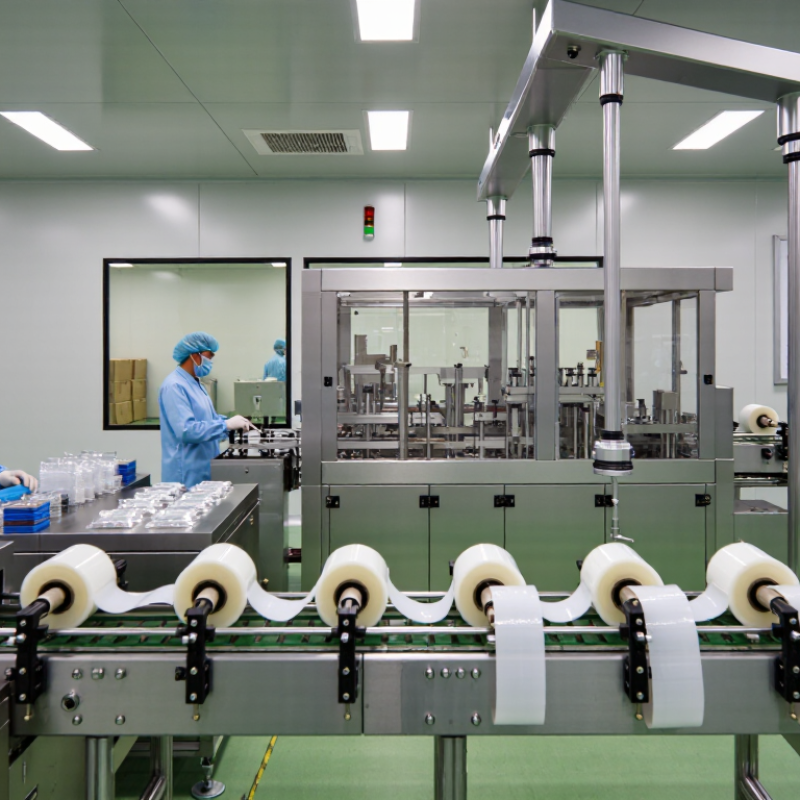
A China waterproof surgical bandage manufacturer designs, produces, and verifies dressings that protect wounds from external water and contamination. Its work usually combines a breathable film, medical adhesive, absorbent pad, release liner, and sterile packaging. Waterproof does not mean completely sealed. Breathability, skin comfort, adhesion, and removal force still matter.
The manufacturer should control materials, cleanroom assembly, coating, cutting, sealing, and batch traceability. Quality teams may perform water-resistance, peel-strength, absorbency, bioburden, and sterilization checks. ISO 13485:2016 provides a recognized quality-management framework for medical devices. The World Health Organization reports that approximately one in ten patients experiences harm during healthcare, with more than half considered preventable. A dependable dressing cannot remove every infection risk, but poor packaging or weak adhesion can increase exposure.
Look closely at the evidence. Ask for validation records, technical files, test methods, and samples from regular production lines. Factory photographs are not enough. The WHO’s 2023 infection-prevention report highlights higher healthcare-associated infection rates in lower-resource settings, making practical wound protection especially important. A capable Chinese manufacturer may offer OEM specifications, multilingual documentation, flexible quantities, and export experience. Yet no factory is flawless. Adhesives can irritate sensitive skin, and “waterproof” claims may fail after repeated movement. Supplier reviews should therefore examine corrective actions, complaint handling, and consistency across batches, not only the lowest quotation.

A China waterproof surgical bandage manufacturer usually begins with the wound-care requirement, not the packaging design. Engineers select a soft, breathable film that blocks external water while allowing moisture vapor to escape. The absorbent pad must cover the incision without sticking to healing tissue. Medical-grade adhesive is applied in controlled layers. Fit matters.
During production, operators inspect incoming film, nonwoven fabric, adhesive, and release liners. Automated coating equipment helps maintain an even adhesive weight. Die-cutting then shapes each bandage with smooth corners, reducing edge lifting. Workers assemble the layers in a clean, controlled area. Sealing machines protect individual packages from moisture and contamination.
Reliable manufacturers test peel strength, water resistance, stretch, absorption, and package integrity. They may also evaluate skin irritation through qualified testing procedures. Batch records connect raw materials with finished products, supporting traceability and corrective action. Sterile products require validated sterilization and routine monitoring. Details matter.
Real production is not flawless. A stronger adhesive may improve attachment but increase skin discomfort. A thicker film may resist water better but reduce breathability. Experienced teams review these compromises through sampling, user feedback, and repeated testing. The best design is practical, consistent, and suitable for the intended wound-care environment.
| Category | Design or Production Dimension | Typical Specification or Practice | Practical Benefit |
|---|---|---|---|
| Film Structure | Waterproof backing | Medical-grade polyurethane (PU) film is commonly used because it can form a thin, flexible and water-resistant barrier. | Helps protect the wound from external water, dirt and microorganisms while allowing movement. |
| Breathability | Moisture-vapor transmission | Microporous or semi-permeable films are selected to allow water vapor and perspiration to escape while resisting liquid water. | Reduces excessive moisture accumulation around the wound and improves wearing comfort. |
| Wound Contact Layer | Absorbent pad | Common materials include nonwoven fabric, rayon/polyester blends or cellulose-based absorbent material; the pad is normally non-adherent or covered with a wound-contact layer. | Absorbs light exudate and helps prevent the dressing from sticking directly to the wound. |
| Adhesive System | Skin-friendly adhesive | Acrylic or silicone-based medical adhesives may be used, depending on the required adhesion, removability and skin sensitivity profile. | Provides reliable fixation while helping limit skin irritation when properly formulated and tested. |
| Adhesive Coverage | Pad-free adhesive margin | The adhesive is applied around the absorbent pad, leaving the central wound-contact area free of adhesive. | Supports secure sealing around the pad and reduces the chance of adhesive contacting the wound. |
| Product Sizes | Standard and custom dimensions | Common retail formats include approximately 25 × 72 mm, 38 × 38 mm and 50 × 100 mm; custom sizes can be developed for specific applications. | Offers suitable coverage for injections, small incisions, catheter sites and postoperative wounds. |
| Edge Design | Rounded or smoothly finished corners | Rounded corners and consistent die-cut edges are commonly used to reduce lifting caused by friction or clothing. | Improves wear time and reduces the risk of premature edge peeling. |
| Release Liner | Easy-peel protective paper or film | Silicone-treated paper or polymer release film is die-cut or scored to support clean removal before application. | Protects the adhesive during storage and makes application more convenient. |
| Material Preparation | Incoming-material inspection | Manufacturers typically verify material identity, dimensions, appearance, adhesive properties and supplier documentation before production. | Improves batch consistency and helps prevent unsuitable materials from entering production. |
| Lamination | Layer bonding and alignment | The backing film, adhesive, absorbent pad and release liner are assembled using controlled coating, laminating and web-alignment processes. | Creates a uniform multilayer dressing with stable dimensions and reliable adhesion. |
| Die Cutting | Shape and size control | Rotary or flatbed die cutting is used to produce consistent outlines, pad placement and release-liner dimensions. | Supports accurate application and reduces material waste in high-volume production. |
| Waterproof Performance | Liquid-barrier testing | Finished products may be evaluated for water penetration, edge sealing and adhesive performance under defined laboratory conditions. | Confirms whether the dressing meets its stated waterproof or shower-resistant claim. |
| Sterilization | Sterile product options | Depending on the product design and regulatory route, sterilization may use ethylene oxide, radiation or another validated method compatible with the materials. | Provides a controlled microbial state for products intended for sterile wound care. |
| Biocompatibility | Skin-contact safety assessment | Materials and finished products are commonly assessed under a biological-evaluation framework such as ISO 10993, according to the intended contact type and duration. | Helps evaluate potential biological risks associated with skin or wound contact. |
| Packaging | Individual pouch or primary package | Sterile dressings are commonly packed in a sealed pouch made from medical-grade paper, film or a compatible multilayer packaging material. | Protects the dressing from contamination and supports shelf-life maintenance. |
| Quality Control | In-process and final inspection | Typical checks include appearance, dimensions, pad position, peel adhesion, package-seal integrity, cleanliness and labeling accuracy. | Helps ensure that each production lot conforms to documented specifications. |
| Manufacturing Capability | OEM and private-label flexibility | Many established manufacturers can support custom sizes, materials, packaging formats, carton quantities and documentation, subject to minimum order quantities and validation requirements. | Allows distributors and healthcare organizations to align the product with market, application and regulatory needs. |
Note: Specifications are typical industry practices and indicative ranges. Final requirements should be confirmed through product validation, applicable regulations and the manufacturer’s technical documentation.
Why Choose a China Waterproof Surgical Bandage Manufacturer?
What Quality Standards Should Manufacturers Meet?
A reliable manufacturer should treat waterproof surgical bandages as medical devices, not simple adhesive products. The WHO Global Guidelines for the Prevention of Surgical Site Infection report infection rates near 11% in low- and middle-income countries. A weak dressing seal can expose wounds to moisture and contaminants. That risk deserves measurable controls.
Look for an ISO 13485 quality management system. It should cover supplier checks, cleanroom procedures, batch records, and complaint handling. Manufacturers should also apply ISO 14971 risk management and ISO 10993 biocompatibility testing. Sterilization must be validated under suitable standards, such as ISO 11135 or ISO 11137. Packaging should follow ISO 11607, with seal strength and integrity tested after aging. Waterproof performance needs evidence, not a confident brochure. Ask for liquid-barrier, peel-adhesion, absorbency, and moisture-vapor results. EN 13726 methods can support relevant wound-dressing evaluations. ASTM barrier tests may also help, depending on the product design.
Tips: Request recent batch reports, sterilization records, shelf-life data, and traceability samples. Check whether an independent laboratory performed testing. A certificate alone is not proof. I would inspect the adhesive edge after shower simulation and skin-contact testing. Small failures matter. Some suppliers may overstate water resistance. That is worth challenging, even when the factory looks professional.
A qualified manufacturer should demonstrate compliance with internationally recognized standards covering quality management, risk control, biocompatibility, sterilization, packaging, and labeling. The chart below shows the number of key quality-control areas commonly addressed by each standard.
Note: This standards-to-control mapping is for comparison purposes. Exact requirements depend on the product classification, materials, sterilization method, intended use, and destination market.
China offers a deep manufacturing base for waterproof surgical bandage supply. Its connected network supports film, adhesive, absorbent pad, packaging, and printing production.
This integration can shorten sourcing steps and improve production coordination. Experienced factories usually offer several adhesive options for sensitive or normal skin. They can also adjust sizes, pad placement, package formats, and sterilization requirements. During supplier evaluation, request material specifications, batch records, stability data, and quality inspection reports. Ask for samples from different production batches. One sample is not enough.
Quality control should cover waterproof performance, adhesion, peel comfort, absorbency, packaging integrity, and skin-contact safety. Qualified manufacturers may operate under medical-device quality systems, but certificates must be checked carefully. A document alone does not prove consistent production. Factory audits, process photographs, and independent testing can reveal practical details. For example, examine whether the edge seals remain firm after movement and light moisture exposure.
China’s supply advantage also includes flexible order quantities and developed export experience. However, low pricing should not become the only purchasing standard. Communication delays, unclear specifications, and inconsistent raw materials can create avoidable risks. I have found that detailed technical files prevent more problems than attractive quotations. Some suppliers still need stronger documentation or faster feedback. That weakness deserves honest discussion before long-term cooperation. Reliable supply comes from verified capability, transparent communication, and repeated quality performance.
Choosing a China waterproof surgical bandage manufacturer requires more than comparing prices. Buyers should examine production experience, material control, and quality evidence. A reliable partner should explain its adhesive, backing film, absorbent pad, and sterile packaging clearly.
Request recent test reports and verify whether they match the proposed product. Check standards such as ISO 13485 and relevant market requirements. Ask for batch records, inspection procedures, and traceability from raw materials to shipment. A factory visit can reveal practical details, including cleanroom discipline, operator training, and storage conditions. Photos help, but direct evidence matters more.
Tips: Start with samples from several manufacturers. Test adhesion on dry and slightly damp skin models. Observe removal comfort after several hours. Ask how the supplier handles complaints, product changes, and delayed deliveries. Confirm minimum order quantities, lead times, packaging options, and communication responsibilities in writing. A capable partner should welcome technical questions, not avoid them. Small warning signs matter. If documents look copied, pause before ordering. I once considered speed a strong quality signal; it was not always true. Buyers should also review samples after transport, because heat and humidity can affect adhesive performance. An honest manufacturer will discuss limitations and suggest improvements, even when the product is not perfect.
© 2023 Bird & Cronin, LLC. All Rights Reserved.

In observance of the 4th of July holiday, our offices will be closed on July 3rd & 4th.