
Choosing a reliable Operation Theatre Surgical Light manufacturer requires more than comparing brightness, prices, or catalogue images. Surgical teams need stable illumination during long procedures, especially when shadows, tissue color, and narrow working areas affect clinical decisions. Chinese manufacturers now offer a broad range of LED operating lights, from compact single-dome systems to ceiling-mounted configurations for complex theatres. Quality varies.
This guide examines manufacturers through practical and professional criteria. These include optical performance, color rendering, shadow control, sterile-handle design, arm movement, heat management, and service support. It also considers documented quality systems and relevant medical-device standards, such as ISO 13485 and IEC 60601 requirements. Certifications matter, but they should not replace verification. Ask for test reports, installation references, warranty terms, and maintenance procedures. A product may look impressive in a showroom yet feel stiff during positioning. That detail matters. So does the availability of replacement parts after installation.
The discussion reflects purchasing concerns from hospital engineers, operating-room planners, distributors, and clinical users. It highlights established Chinese suppliers while avoiding unsupported claims about market leadership. Readers should compare each manufacturer against their own surgical specialties, room dimensions, electrical conditions, and local regulatory requirements. No single model suits every theatre. Even experienced buyers can overlook glare, control-panel usability, or cleaning access. A careful evaluation remains essential. Performance in daily practice is the real measure.
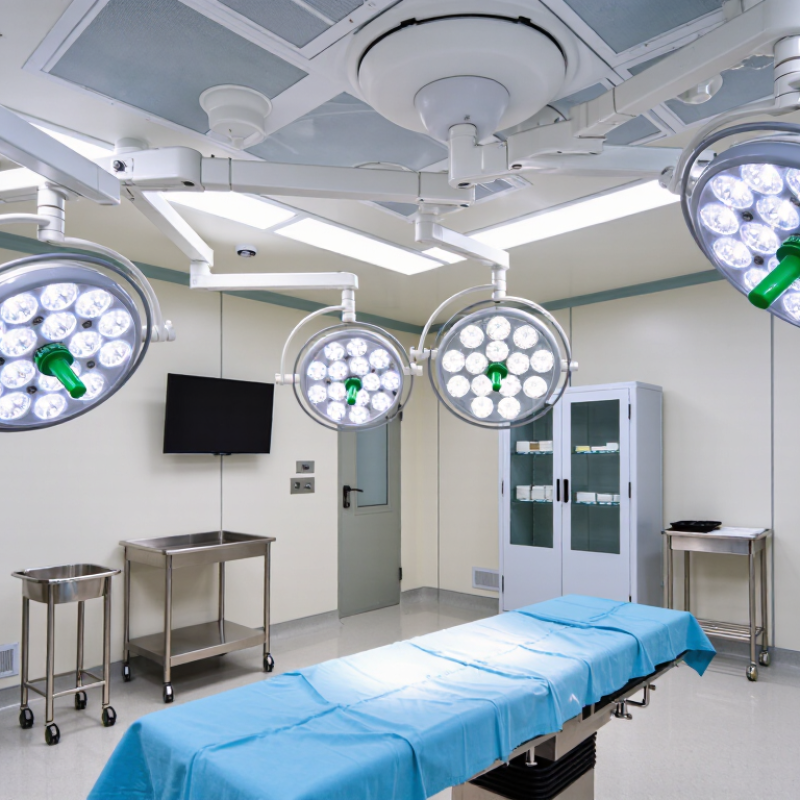
China Top Operation Theatre Surgical Light Manufacturers
Definition and Role of Operation Theatre Surgical Lights
An operation theatre surgical light is a medical luminaire designed to illuminate the surgical field without distracting shadows. It must reveal tissue color, depth, edges, and fluid boundaries accurately. In daily operating-room practice, surgeons also need stable light during movement, draping, and instrument changes.
The IEC 60601-2-41 standard addresses essential safety and performance requirements for surgical and diagnostic luminaires. Common systems provide approximately 40,000 to 160,000 lux, depending on the model and clinical task. However, maximum brightness is not the only measure of quality. Excessive glare can increase eye fatigue, while poor color rendering may weaken visual judgment. The World Health Organization reports that surgical-site infections affect about 11% of surgical patients worldwide. Proper lighting cannot prevent every infection, but it supports cleaner visualization and more controlled procedures. That role is often underestimated.
Tips: Check illuminance, color rendering, shadow control, heat output, and sterile-handle design. Ask for test records, not only product claims. Verify performance after installation. A light can meet specifications yet feel uncomfortable in a real theatre. Staff feedback matters, and it should be recorded rather than assumed.

High-quality surgical lighting starts with accurate color rendering, not brightness alone. A reliable system should reveal subtle differences between tissue, blood, and surgical materials. Look for a high CRI, stable color temperature, and adjustable intensity. Surgeons often need a focused beam during delicate work, then softer illumination for wider procedures. Smooth controls help staff adjust light without breaking concentration.
Shadow management is equally important. Multiple LED modules can reduce shadows when hands or instruments cross the operating field. Deep-cavity illumination also matters, especially during abdominal or orthopedic procedures. A balanced arm should move easily but remain steady above the table. Sterile handles need a firm grip and simple cleaning surfaces. Sealed housing helps limit dust and supports routine infection-control work.
Safety depends on details that are easy to overlook. Thermal control should prevent excessive heat near the patient and surgical team. Emergency power support can maintain illumination during brief electrical interruptions. Manufacturers in China should provide documented testing, service guidance, and compliance with relevant medical-device standards, including IEC 60601-2-41 where applicable. Clinical engineers should verify installation, light intensity, and control response on site. No lighting system is perfect. Glare, awkward positioning, or poor maintenance can still reduce performance. Real operating-room feedback deserves more attention.
China Top Operation Theatre Surgical Light Manufacturers
Leading surgical light manufacturers in China are moving beyond basic illumination. They now develop LED systems with adjustable color temperature, deep-cavity lighting, shadow reduction, and sterile control options. Grand View Research reported that the global surgical lights market was valued at approximately USD 1.38 billion in 2023. It also projects continued growth through 2030, supported by operating-room upgrades and minimally invasive procedures.
Experienced Chinese manufacturers typically combine optical engineering, metal fabrication, electronics, and hospital installation support. Reliable suppliers should provide photometric test results, thermal management data, service records, and compliance evidence for IEC 60601-2-41. Their production process should include incoming-material checks, illumination testing, electrical safety tests, and long-duration operation trials. Practical experience matters here. A bright lamp can still create glare, heat, or uncomfortable shadows during a long procedure.
Tips: Ask for a complete technical file, not only product photos. Check illuminance at several distances and angles. Confirm whether local engineers can replace control boards and LED modules. Also review the warranty exclusions carefully. No supplier is perfect. Even strong factories may communicate poorly during customization, so define installation drawings and acceptance standards before ordering. Reports from MarketsandMarkets and other industry analysts indicate that hospitals increasingly value energy efficiency, ergonomic movement, and connected operating-room equipment. These details may influence long-term cost more than the initial quotation.
China’s leading operating theatre light manufacturers should treat standards as daily engineering controls, not certification paperwork. ISO 13485 requires documented risk management, traceability, and corrective actions throughout production. IEC 60601-1 addresses electrical safety, while IEC 60601-2-41 specifies requirements for surgical luminaires. These standards guide insulation checks, leakage-current testing, electromagnetic compatibility, and mechanical stability.
The WHO Global Report on Infection Prevention and Control (2022) estimates that 15 of every 100 patients in acute-care hospitals in low- and middle-income countries acquire at least one healthcare-associated infection. This makes cleanability important.
Manufacturers should verify sealed housings, smooth joints, disinfectant resistance, and protected adjustment handles. They should also measure illuminance, shadow dilution, color rendering, color temperature, and heat near the surgical field. Test results need calibrated instruments and retained records.
Small details matter.
A reliable factory samples incoming LEDs, confirms optical consistency, and tests every finished unit for movement, control response, and emergency backup performance. Production records should connect each light to its components, operator, test values, and release decision. Independent laboratory testing strengthens credibility, but it cannot replace factory discipline. In practice, some suppliers still prioritize brightness over glare control or publish ideal laboratory figures without showing field performance. That gap deserves scrutiny. Hospital trials, surgeon feedback, and scheduled post-installation checks can reveal problems that factory testing misses.
China Top Operation Theatre Surgical Light Manufacturers
How to Choose a Reliable Chinese Surgical Light Manufacturer
A dependable Chinese surgical light manufacturer should prove performance, not only offer a low quotation. The World Health Organization estimates that about 313 million major surgical procedures occur worldwide each year. Reliability therefore affects many operating rooms. During factory evaluations, check illumination tests, heat control, sterile handle design, and arm movement. A suitable lamp should provide stable intensity, accurate color rendering, and minimal shadows. Ask for test records under continuous operation, not just laboratory photographs.
Tips: Request IEC 60601-2-41 compliance evidence, ISO 13485 certification, and recent third-party test reports. Confirm whether the factory controls LEDs, power modules, and mechanical arms internally. A 2024 industry analysis from Grand View Research identifies LED efficiency and modular operating-room systems as important market drivers. Another market report expects surgical-light demand to grow at roughly five percent annually through the decade. These figures suggest stronger competition, but growth does not guarantee quality. That part needs checking.
Review installation cases in hospitals with similar ceiling heights and electrical conditions. Ask how quickly spare parts can be supplied and who performs remote troubleshooting. Video inspections are useful, though they can hide uncomfortable details. Request production samples or witness testing before payment. Pay attention to flicker, noisy movement, loose joints, and uneven brightness at the surgical field. Some suppliers communicate confidently but provide incomplete validation files. That is a warning. My own selection process would score technical evidence above polished sales language, while allowing room to question the scoring method itself.
| Evaluation Dimension | Recommended Verification Point | Reference Requirement or Data | Evidence to Request from the Manufacturer | Suggested Weight |
|---|---|---|---|---|
| Quality Management System | Confirm that the production and quality processes are controlled under a medical-device quality system. | ISO 13485:2016 certification should be current and within the stated scope. | Current certificate, certification scope, issuing body, validity dates, and audit status. | 15% |
| Electrical Safety | Evaluate protection against electric shock, abnormal operation, leakage current, and mechanical hazards. | IEC 60601-1 is the primary general standard for medical electrical equipment. | Test report, declaration of conformity, electrical safety test records, and applicable national approvals. | 15% |
| Surgical Luminaire Compliance | Check whether the design addresses the specific safety and performance requirements for surgical and diagnostic luminaires. | IEC 60601-2-41 is the relevant particular standard for surgical and diagnostic luminaires. | Product-specific compliance report referencing the applicable edition and test configuration. | 15% |
| Photometric Performance | Compare illuminance, color rendering, color temperature, shadow management, and light-field stability. | Request measured values at the specified working distance; do not rely only on marketing descriptions. | Independent photometric report, test distance, measurement method, tolerance, and product configuration. | 15% |
| Color and Tissue Visibility | Assess whether the light supports accurate visual differentiation during procedures. | Ask for CRI and, where relevant, R9 or other color-quality data rather than a single color-temperature value. | Complete color-performance data sheet and sample evaluation under representative operating-room conditions. | 8% |
| Mechanical Structure | Review arm movement, balance, ceiling load, sterilizable handles, brake performance, and positioning repeatability. | The mounting structure must be compatible with the room’s ceiling, reinforcement, and electrical layout. | Installation drawings, ceiling-load requirements, movement test records, and site survey checklist. | 10% |
| Risk Management | Confirm that hazards have been identified and controlled throughout the product life cycle. | ISO 14971:2019 is the recognized framework for medical-device risk management. | Risk-management summary, hazard analysis, residual-risk evaluation, and change-control procedure. | 8% |
| Reliability and Testing | Check durability of LEDs, control systems, suspension arms, fans, switches, and backup functions. | Reliability claims should be supported by defined test conditions, sample sizes, and acceptance criteria. | Factory acceptance test, burn-in records, life-test methodology, failure-rate data, and corrective-action records. | 7% |
| Regulatory Documentation | Ensure the supplied model and configuration match the documents used for market access. | Documentation requirements vary by destination market and device classification. | Technical file index, labeling, instructions for use, certificates, declarations, and registration support documents. | 5% |
| After-Sales Support | Evaluate installation, training, troubleshooting, spare parts, warranty, and response procedures. | Require written service levels, spare-parts availability, and a defined warranty period. | Warranty terms, service contacts, spare-parts list, response-time commitment, and training plan. | 7% |
| Total Suggested Evaluation Weight | 100% | |||
© 2023 Bird & Cronin, LLC. All Rights Reserved.

In observance of the 4th of July holiday, our offices will be closed on July 3rd & 4th.