Top Electric Hospital Beds for Sale in 2026 What to Know?
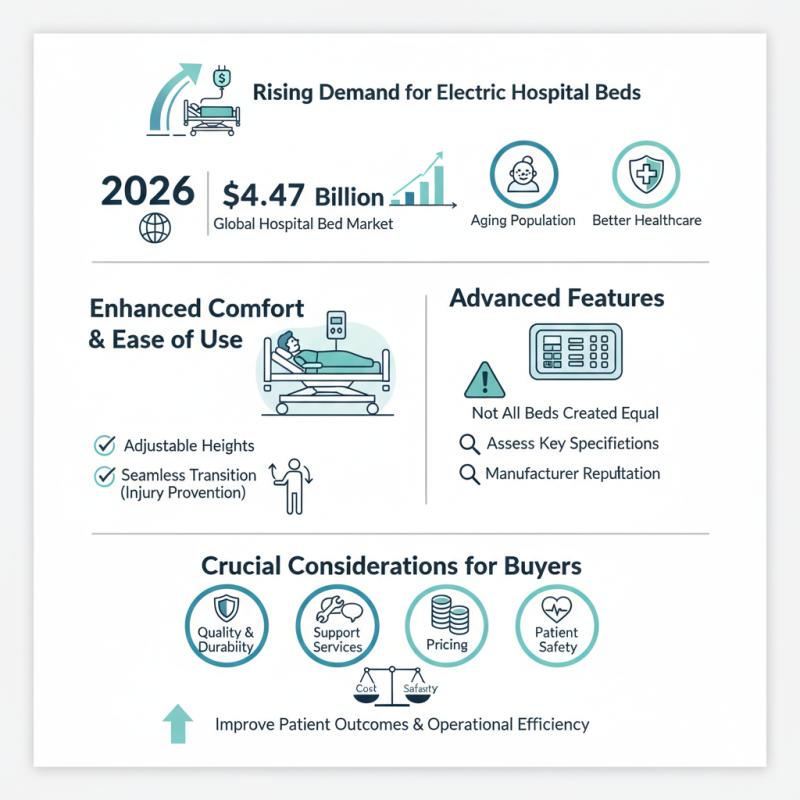
The demand for electric hospital beds for sale is on the rise. According to a recent industry report by Grand View Research, the global hospital bed market is projected to reach $4.47 billion by 2026. This growth is driven by an increasing aging population and the need for better healthcare solutions. Electric beds offer enhanced comfort and ease of use for both patients and caregivers.
These beds come equipped with advanced features. They usually have adjustable heights, which help in patient care. A seamless transition from sitting to lying down can prevent injuries. However, not all electric hospital beds are created equal. Some models may lack essential safety features, leading to potential risks. Buyers need to assess key specifications and manufacturer reputations.
In a competitive market, it's crucial to find the right product. Researching electric hospital beds for sale can be overwhelming. Healthcare facilities must not just consider pricing, but also quality, durability, and support services. Balancing cost with patient safety will always require careful scrutiny. Investing in the right electric hospital bed can significantly improve patient outcomes and operational efficiency.
Understanding Electric Hospital Beds: Features and Benefits
Electric hospital beds are revolutionizing patient care. They offer adjustable positions, enhancing comfort for both patients and caregivers. These beds can be raised or lowered easily, aiding patient transfers and reducing strain on staff. Many models include side rails for added safety, preventing falls during restless nights.
Caregivers appreciate features like built-in safety alarms. These alarms alert staff if a patient needs assistance. Additionally, some beds come with massage functions, promoting relaxation and circulation.
Tips: Look for beds with easy-to-use controls. Consider weight capacity and size. Assess if the bed fits your available space. Not all features may be necessary, so prioritize based on specific needs. Safety is paramount; never compromise on this aspect. Designs should be functional yet comfortable, striking a balance that might be challenging to achieve.
Top Electric Hospital Beds for Sale in 2026 What to Know?
| Model | Weight Capacity | Adjustable Features | Price Range ($) | Warranty Period |
| Model A | 400 lbs | Height, Backrest, Footrest | 1500 - 2000 | 5 Years |
| Model B | 350 lbs | Height, Backrest | 800 - 1200 | 3 Years |
| Model C | 500 lbs | Full Electric | 2500 - 3000 | 7 Years |
| Model D | 450 lbs | Height, Backrest, Trendelenburg | 1800 - 2300 | 5 Years |
Key Factors to Consider When Choosing Electric Hospital Beds
Choosing an electric hospital bed is a key decision. It impacts both comfort and care. Consider the bed’s adjustability. A good bed allows for various positions. This helps patients with mobility issues. Look for beds that include head and foot adjustments. They should easily raise or lower.
Next, assess the weight capacity. This is vital for safety. Beds come with different weight limits. Make sure the bed meets the patient’s needs. Examine the mattress compatibility as well. Some may require special mattresses for pressure relief.
Accessibility features are crucial too. Side rails and controls should be user-friendly. Patients and caregivers need to operate them without struggle. Keep in mind the bed’s size. It should fit comfortably in the intended space. Remember, additional features may add complexity. This can sometimes hinder ease of use.
Top Brands of Electric Hospital Beds in 2026: A Comparative Review
When considering electric hospital beds in 2026, a few key factors shine through. The market is rapidly evolving with new technology. Reports indicate a 15% annual growth in the electric hospital bed sector. Facilities are increasingly prioritizing patient comfort and caregiver convenience.
Many beds now feature advanced positioning systems. These beds allow smooth transitions between sitting and lying down. They also help in reducing the risk of bedsore. A recent survey highlighted that 70% of hospitals view these beds as essential equipment. However, not all beds offer equal value. While some have intuitive controls, others can be overly complex.
Durability is another area of concern. A sizable percentage of beds fail to meet long-term usage quality. This can lead to increased costs for healthcare providers. Industry experts stress the importance of investing in quality products. The comparative review of different models reveals significant discrepancies in user experience and patient outcomes. Seeking beds that strike a balance between functionality and ease of use is crucial.
Price Ranges and Budgeting for Electric Hospital Beds
When considering electric hospital beds, pricing plays a crucial role. The average cost of a basic model can range from $1,000 to $3,500. Advanced features, like adjustable frames and built-in safety systems, raise prices significantly. High-end models can cost upwards of $7,000. Understanding these price ranges is essential for effective budgeting.
A survey by Health Industry Insights suggests that hospitals are increasingly investing in more flexible beds. They seek options that enhance patient comfort and ease of use. However, this investment can strain budgets. Hospitals must weigh costs against benefits carefully. Some facilities resort to leasing instead of purchasing to manage expenses.
Patients or caregivers also face challenges. A home care bed’s cost can range from $850 to $5,000. Insurance coverage varies, making affordability a critical factor. Families often find themselves navigating complex options with limited financial resources. This complexity can lead to frustration and indecision, highlighting the need for better financial guidance.
Top Electric Hospital Beds Price Ranges in 2026
Latest Innovations in Electric Hospital Bed Technology for 2026
The electric hospital bed technology in 2026 is advancing rapidly. Beds now feature adjustable positions for better comfort. Patients can easily elevate their heads or legs with a touch of a button. This innovation aids recovery and enhances patient autonomy. One key focus is safety. Many beds now include side rails and a locking system to prevent accidents.
The incorporation of smart technology sets these beds apart. Some models use sensors to monitor vital signs, alerting staff if something changes. This feature aids in early intervention. However, the reliance on technology raises questions. What happens if there’s a power failure?
Another noteworthy advancement is improved materials. Beds are lighter yet durable, making them easier for staff to maneuver. However, this can lead to wear and tear over time. Maintenance is crucial, but it can often be overlooked. The balance between innovation and practicality remains a challenge for manufacturers and healthcare providers alike.