
The global demand for cohesive bandages is shaped by wound care, sports medicine, veterinary treatment, and home first-aid use. These wraps adhere to themselves without clips, making them practical for ankles, wrists, and curved body areas. Grand View Research’s 2024 wound care market analysis identifies rising outpatient treatment and home healthcare as important growth factors. Fortune Business Insights also reports continued expansion in advanced wound care, supported by aging populations and chronic disease management.
This article examines ten leading manufacturers with a practical, evidence-based lens. A capable Cohesive Bandage Manufacturer should demonstrate stable compression, reliable self-adhesion, clean edge cutting, and consistent roll length. Manufacturing experience matters. A nurse wrapping a swollen ankle cannot compensate for uneven stretch or weak bonding. Materials also deserve close attention, including latex-free options, breathable nonwoven substrates, skin comfort, and resistance to moisture during daily movement.
Quality systems are equally important. ISO 13485 certification, documented batch testing, traceability, and clear labeling can strengthen confidence across hospitals and distributors. Regulatory expectations differ by market, so buyers should verify applicable registrations and technical files rather than rely on marketing language. Reports from the International Organization for Standardization and regulatory guidance from the U.S. FDA underline the importance of risk management and controlled production for medical devices.
No ranking is perfect. Product performance can change by size, adhesive formulation, and application technique. Some manufacturers communicate these differences better than others. The following selection therefore considers manufacturing capability, product breadth, quality evidence, international reach, and user feedback. Real-world testing still matters. A neat catalogue never replaces a secure wrap on a moving joint.
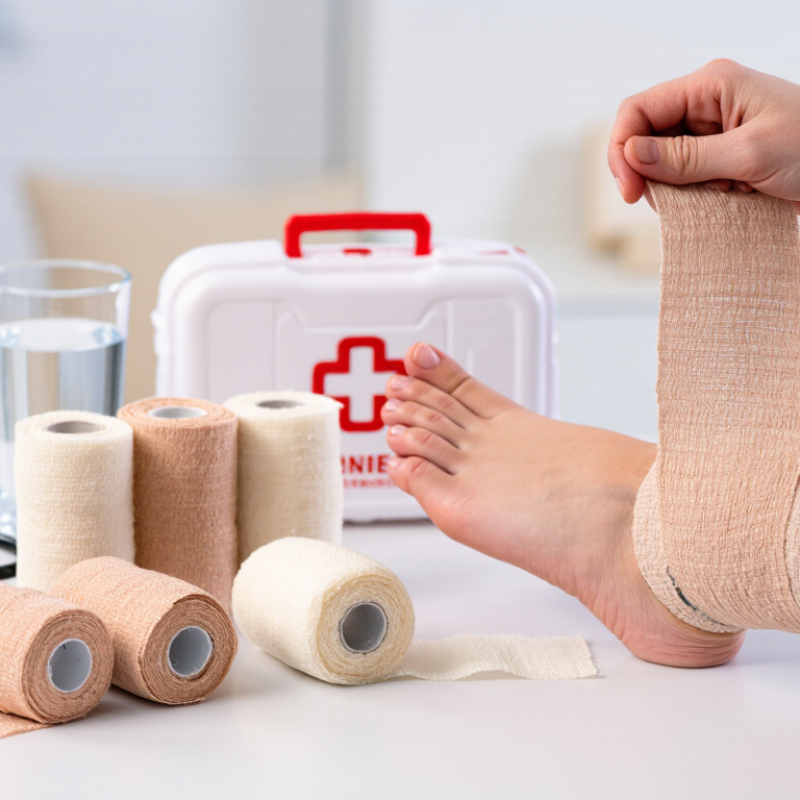
A cohesive bandage is a self-adhering elastic wrap that grips itself, not skin or hair. It usually combines soft nonwoven fabric with a lightweight cohesive coating. This design supports quick application without clips, pins, or adhesive tape. The wrap can hold its position around joints, fingers, paws, and irregular body contours. It does not cleanse wounds or treat infection.
Common uses include securing dressings, supporting minor sprains, covering padding, and holding cold packs. Athletic staff, caregivers, veterinary teams, and first-aid users value its simple handling. A dependable product should stretch evenly, tear cleanly, and unwind without sudden tension. Breathable fabric can help manage warmth and moisture during extended wear. Soft edges may reduce rubbing near the wrist, ankle, or knuckle. Compression must remain controlled. Excessive tightness can affect circulation.
Material quality influences comfort, grip, and storage stability. Heat and humidity may change the coating’s tackiness. That detail is easy to overlook. In practice, users sometimes pull the wrap too firmly when securing a moving joint. I would question any claim promising identical performance across every skin type and climate. Clear labeling should explain tension, wear time, removal, and disposal. Checking skin color, temperature, sensation, and swelling remains important after application. No wrap is perfect. Small handling errors still matter.

A credible Top 10 list of cohesive bandage manufacturers should rely on evidence, not visibility alone. Evaluators examine fabric strength, stretch recovery, adhesive consistency, and skin comfort. A reliable bandage should wrap smoothly without slipping or leaving excessive residue. Small details matter. Production experience also reveals how materials perform across different climates and storage conditions.
Independent testing can confirm tensile strength, breathability, packaging quality, and batch uniformity. Evaluators should review documented quality systems, traceability, factory controls, and technical support. Customer feedback adds practical insight, especially from clinics, sports teams, and emergency suppliers. Still, no scorecard is perfect. A strong sample may not represent every production batch. This is where repeated sampling becomes essential.
Tips: Request samples from multiple batches. Check the roll after opening and after several hours of wear. Compare stretch, edge stability, and removal comfort. Ask for clear test reports and manufacturing records. Avoid judging quality by price or packaging alone. A polished presentation can hide inconsistent performance. Reviewers should record findings carefully, admit uncertain evidence, and update rankings when new data appears.
Top 10 Cohesive Bandage Manufacturers Worldwide
The global wound care market is expanding steadily. Fortune Business Insights valued it at about USD 22.2 billion in 2023. Its report also forecasts continued growth through 2032. Cohesive bandages remain important because they secure dressings without adhesive contact with skin. The leading manufacturers usually compete through consistent compression, breathable materials, and reliable tear strength. Many facilities now assess production quality through ISO 13485 systems, batch traceability, and documented performance testing. These details matter more than polished packaging.
A review of the top 10 cohesive bandage manufacturers worldwide should examine more than sales visibility. Buyers should compare width options, latex-free construction, stretch recovery, moisture behavior, and sterile packaging controls. Grand View Research’s wound care analysis highlights the growing demand for convenient, easy-to-apply products in home care and clinical settings. That trend supports manufacturers with flexible production and dependable regional supply. Still, market rankings can be imperfect. Public revenue figures rarely separate cohesive bandages from broader wound care products. A low-profile producer may offer stronger technical value than a highly visible competitor.
Tips: Check compression consistency across the roll. Test the bandage on gloves before clinical use. Review lot numbers, shelf life, and regulatory documentation. Ask whether the material remains secure during movement and perspiration. Small tests reveal weaknesses. Avoid choosing only by price; unusually low pricing may indicate thinner fabric, weaker elasticity, or limited quality control.
This chart presents an anonymous comparison based on commonly published cohesive-bandage product specifications, including roll length and available width ranges. Company names and brand-level data are intentionally excluded because comprehensive, independently audited manufacturer market-share data is not publicly standardized.
Top 10 Cohesive Bandage Manufacturers Worldwide
Product Types, Materials, and Manufacturing Standards
Cohesive bandages differ by stretch, width, compression, and intended use. Common types include elastic self-adherent wraps, nonwoven rolls, and latex-free athletic bandages. Light compression suits fragile skin. Higher-stretch designs support joints during movement. A 2024 Fortune Business Insights report forecasts the global medical tapes market to expand at more than 5% annually through 2030. Cohesive products represent only one segment, so this figure should not be treated as a direct bandage forecast.
Material selection affects comfort and failure risk. Cotton feels breathable, but it can absorb moisture quickly. Polyester improves strength and dimensional stability. Rayon creates a softer surface, while synthetic rubber or spandex supplies controlled stretch. Latex-free construction remains important for sensitive users. During practical inspection, I would check whether the wrap unwinds evenly, adheres without excessive pressure, and leaves minimal residue. Small defects matter.
Manufacturers should operate under ISO 13485 quality systems, with documented traceability and process controls. Skin-contact materials commonly require biological evaluation under ISO 10993. Tensile strength, elongation, adhesion, and aging should receive batch-level testing. ASTM methods can support consistent performance measurements. Regulatory files should also identify sterilization status, shelf life, packaging integrity, and intended use. A 2023 industry analysis from Mordor Intelligence identifies rising demand for lightweight, latex-free medical tapes. However, market reports often combine several product categories, which makes direct manufacturer comparisons imperfect.
| Rank | Anonymized Manufacturer Profile | Primary Product Types | Common Substrate Materials | Elasticity and Compression Range | Adhesive or Cohesion System | Latex-Free Availability | Typical Widths | Typical End Uses | Relevant Manufacturing and Quality Standards | Common Regulatory Classification |
|---|---|---|---|---|---|---|---|---|---|---|
| 1 | Manufacturer Profile 01 | Self-adherent elastic bandages; light and medium compression wraps | Nonwoven polyester, polypropylene, and elastomeric yarns | Moderate stretch; designed for controlled support rather than rigid immobilization | Micro-structured cohesive coating that bonds to itself without skin adhesive | Yes | 2.5 cm, 5 cm, 7.5 cm, 10 cm, and 15 cm | Sports support, first aid, fixation of dressings, and general compression | ISO 13485 quality management; ISO 14971 risk management; applicable biocompatibility evaluation under ISO 10993 | Typically a non-invasive medical device; classification varies by intended use and jurisdiction |
| 2 | Manufacturer Profile 02 | High-stretch cohesive compression bandages; long-roll clinical formats | Polyester or cotton-polyester blends with elastic core yarns | High extensibility with graduated or sustained compression options | Latex-free cohesive polymer coating; no clips normally required | Yes | 5 cm, 7.5 cm, 10 cm, and 15 cm | Edema management, wound dressing retention, and orthopedic support | ISO 13485; ISO 14971; ISO 10993 where patient-contact evaluation is required; controlled process validation | Medical-device status depends on compression claims and intended clinical application |
| 3 | Manufacturer Profile 03 | Lightweight cohesive wraps; colored and printed identification formats | Spunbond polypropylene, polyester nonwoven, and elastic filaments | Light to moderate stretch for secure dressing fixation | Pressure-sensitive cohesive coating that adheres to the bandage surface | Yes | 2.5 cm, 5 cm, 7.5 cm, and 10 cm | First aid kits, catheter and dressing fixation, and sports taping | ISO 13485; incoming-material inspection; coating-weight control; tensile-strength and unwind testing | Usually supplied as a non-sterile medical or first-aid accessory |
| 4 | Manufacturer Profile 04 | Veterinary cohesive bandages; hoof, paw, and limb wraps | Nonwoven polypropylene, polyester, and soft elastic fibers | Flexible stretch with low-to-moderate compression characteristics | Self-adhering coating formulated for hair-friendly removal | Often available | 5 cm, 7.5 cm, 10 cm, and 15 cm | Animal wound care, limb protection, bandage retention, and grooming support | Documented material specifications; batch traceability; tensile, cohesion, and skin-contact safety testing | Regulatory treatment varies between animal-health products and human medical devices |
| 5 | Manufacturer Profile 05 | Orthopedic cohesive wraps; support and under-wrap applications | Cotton, rayon, polyester, and elastomeric blends | Moderate to high stretch with conformability around joints and contours | Non-adhesive cohesive finish designed to minimize slippage | Yes | 5 cm, 7.5 cm, 10 cm, 15 cm, and 20 cm | Orthopedic support, cast padding, joint stabilization, and dressing retention | ISO 13485; ISO 14971; ISO 10993 assessment for prolonged skin contact; validated packaging processes | Classification depends on whether the product provides therapeutic compression or only fixation |
| 6 | Manufacturer Profile 06 | Sterile cohesive bandage systems; individually packaged wound-care formats | Medical-grade nonwoven polyester or polypropylene with elastic fibers | Light to moderate stretch intended for dressing fixation | Cohesive synthetic coating; no direct adhesive layer on the skin-facing side | Yes | 5 cm, 7.5 cm, 10 cm, and 15 cm | Post-operative care, wound dressing retention, and clinical first aid | ISO 13485; ISO 11607 packaging requirements; ISO 11135 or ISO 11137 when applicable sterilization processes are used | Often regulated as a non-invasive or low-risk medical device, subject to local rules |
| 7 | Manufacturer Profile 07 | High-visibility cohesive wraps; emergency, tactical, and outdoor formats | Polyester or polypropylene nonwoven with high-visibility pigments | Moderate elasticity optimized for rapid application in the field | Self-cohesive polymer coating with tear-by-hand construction | Yes | 5 cm, 7.5 cm, 10 cm, and 15 cm | Emergency response, outdoor activities, workplace first aid, and sports | ISO 13485 where marketed as a medical device; colorfastness, tensile, unwind, and skin-contact testing | May be marketed as a first-aid product or medical device depending on claims |
| 8 | Manufacturer Profile 08 | Economy cohesive bandages; bulk rolls and private-label-compatible formats | Polypropylene nonwoven, polyester, and synthetic elastic yarns | Light to moderate stretch with general-purpose support | Standard cohesive coating applied by controlled roll-to-roll processing | Commonly available | 2.5 cm, 5 cm, 7.5 cm, 10 cm, and 15 cm | Retail first aid, home care, sports, and dressing fixation | Batch traceability; dimensional, tensile, cohesion, and coating-uniformity inspections; ISO 13485 for medical-device production | Usually non-sterile and non-invasive; exact classification depends on market claims |
| 9 | Manufacturer Profile 09 | Premium soft-touch cohesive bandages; sensitive-skin and pediatric formats | Soft polyester, rayon, cotton blends, and low-irritation elastic fibers | Low to moderate compression with enhanced conformability | Soft synthetic cohesive coating engineered to reduce residue and discomfort | Yes | 2.5 cm, 5 cm, 7.5 cm, and 10 cm | Pediatric care, sensitive skin, dressing fixation, and long-wear applications | ISO 13485; ISO 10993 biological evaluation where applicable; irritation and sensitization testing; controlled clean manufacturing | Regulatory status depends on intended use, contact duration, and product claims |
| 10 | Manufacturer Profile 10 | Industrial and occupational cohesive wraps; reinforced support formats | High-strength polyester, polypropylene, and elastic reinforcement yarns | Moderate stretch with improved tear resistance and mechanical durability | High-cohesion synthetic coating for secure fixation during movement | Available on selected lines | 5 cm, 7.5 cm, 10 cm, 15 cm, and 20 cm | Workplace first aid, protective support, equipment padding, and temporary securing | ISO 13485 when produced for medical use; tensile, tear, cohesion, residue, and packaging-integrity testing | May be classified as a first-aid accessory, medical device, or industrial product according to intended use |
Note: The manufacturer identifiers are intentionally anonymized. Product specifications, materials, standards, and regulatory classifications represent documented industry practices and may vary by product configuration, intended use, market, and jurisdiction.
Cohesive bandages are gaining attention as clinics seek faster, cleaner dressing changes. Grand View Research valued the global advanced wound care market at approximately USD 10.4 billion in 2023. Its forecast also indicates continued growth through 2030. This broader trend supports demand for reliable compression and fixation products. However, market reports classify cohesive bandages differently. Buyers should compare definitions before trusting headline figures.
Performance matters more than catalogue claims. During supplier evaluations, test adhesion after repeated hand movement and light perspiration. A bandage should grip itself without pulling fragile skin. Check stretch recovery, edge fraying, tearability, and airflow. Latex-free materials can reduce allergy concerns. Skin-contact materials should also be supported by documented safety testing. Small details matter.
Packaging matters too.
Smithers reports continued pressure on healthcare packaging to improve sustainability and material efficiency. Buyers should examine roll length, individual wrapping, carton strength, and disposal guidance. A lower unit price may hide shorter rolls or inconsistent thickness. Request samples from the leading ten candidates, then score them under identical conditions. Do not rely only on laboratory sheets; real handling can expose weak elasticity or excessive lint. I would also review complaint rates and batch traceability, because even strong suppliers occasionally deliver inconsistent lots.
© 2023 Bird & Cronin, LLC. All Rights Reserved.

In observance of the 4th of July holiday, our offices will be closed on July 3rd & 4th.