Top 10 Tips for Choosing the Right Orthopedic Walking Boot?
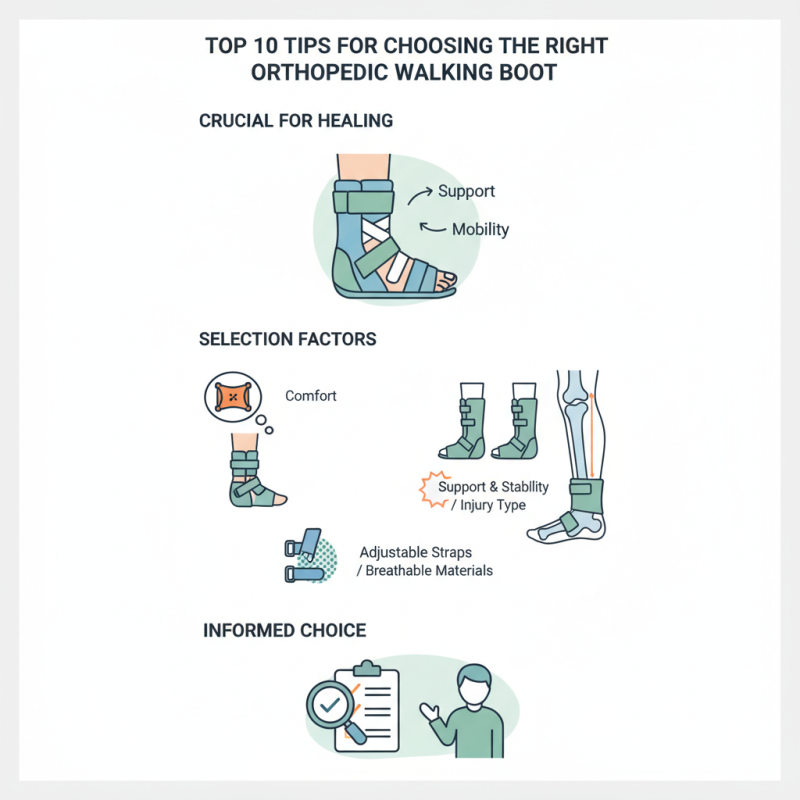
Choosing the right orthopedic walking boot can significantly impact your healing journey. After an injury or surgery, mobility is crucial. An orthopedic walking boot provides essential support to the foot and ankle. Without the correct boot, recovery may be prolonged or complicated.
When selecting an orthopedic walking boot, comfort is key. A poorly fitting boot can cause discomfort and hinder healing. Consider the level of support and stability you need. Different injuries require different types of boots, making it essential to understand your specific situation.
Additionally, look for features like adjustable straps and breathable materials. These aspects can enhance your experience, promoting better healing. An orthopedic walking boot is a vital tool for recovery, but its effectiveness relies on making an informed choice. Take time to evaluate your options before purchasing.
Understanding the Purpose of an Orthopedic Walking Boot
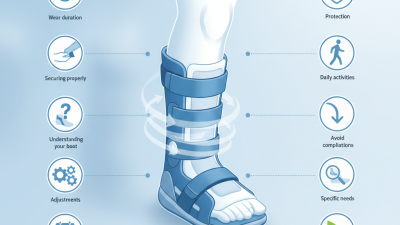
Orthopedic walking boots are essential for recovery after foot or ankle injuries. They serve to immobilize the affected area, allowing healing to take place. The American Academy of Orthopaedic Surgeons states that these boots help redistribute weight away from the injury site, easing pain and preventing further damage. Proper use can improve outcomes and accelerate healing times.
When selecting a walking boot, understanding its purpose is crucial. These boots often come in various styles. Some are designed for softer support, while others provide more rigid structure. According to a recent survey by the Journal of Orthopaedic Surgery, around 70% of patients reported improved comfort with appropriately chosen boots. Factors such as the type of injury and level of comfort are key in decision-making.
Yet, many users struggle to find the right fit. Inadequate support can lead to complications, such as prolonged pain or instability. It's important to consult with a medical professional when choosing a boot. While self-evaluation is common, it can lead to misjudgments about the needed support level. Making informed decisions can significantly improve recovery outcomes.
Identifying the Right Size and Fit for Comfort and Support
When selecting an orthopedic walking boot, size and fit are crucial for comfort and support. A boot that is too tight can cause pain, while one that is too loose may not provide adequate protection. Measuring your foot accurately is essential. Use a ruler or measuring tape to find the correct length and width. Many medical supply stores offer sizing guides. However, personal preference plays a role. Some may prefer a snug fit, while others need extra space for swelling.
Consider the boot's adjustable features. Straps, laces, and padding can modify the fit. Test different adjustments. Walk around in the boot to assess comfort. Look for areas of pressure or chafing. These might indicate that the size is not quite right. Take note of how your foot feels in the boot after some time. If discomfort persists, reconsider your choice. Ultimately, achieving the perfect fit can significantly impact your healing process and mobility.
Top 10 Tips for Choosing the Right Orthopedic Walking Boot
This bar chart illustrates the importance level (on a scale of 1 to 10) of various factors to consider when choosing the right orthopedic walking boot. Size and adjustability are the most crucial aspects, while style ranks the lowest in importance.
Material Choices: Plastic vs. Soft Fabric in Boot Construction
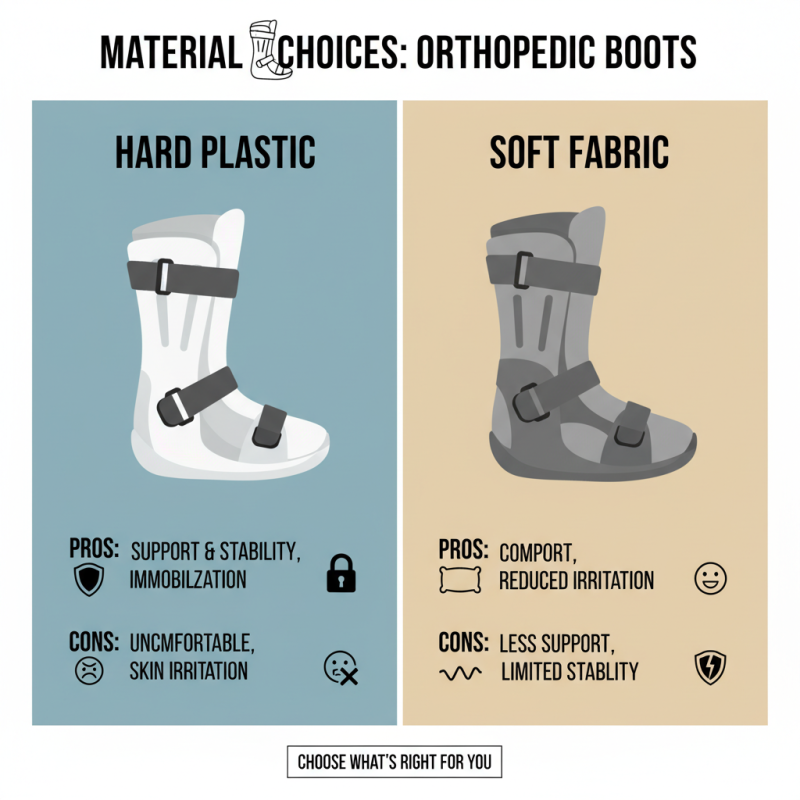
When it comes to orthopedic walking boots, the choice of materials is crucial. Two primary options often come up: hard plastic and soft fabric. Plastic boots provide excellent support and stability. They effectively immobilize the injured area while allowing for controlled movement. However, some users find these boots uncomfortable over prolonged wear. The rigid design can dig into the skin, leading to irritation.
On the other hand, soft fabric boots offer a more flexible fit. They tend to be lighter and can adapt better to the shape of your foot. This adaptability can significantly enhance comfort, especially during the healing process. Yet, they may not provide the same level of firm support as their plastic counterparts. This can be a significant drawback for those recovering from more severe injuries. It's essential to consider personal comfort and the specific nature of the injury when making a choice. Seek professional advice, and remember, the right boot can make a meaningful difference in recovery.
Assessing Height and Style for Different Types of Injuries
Choosing the right orthopedic walking boot requires careful consideration of height and style. The boot's height can affect comfort and support. Shorter boots may be suitable for minor injuries, while taller boots provide more stability for severe conditions. A taller boot often extends above the ankle, offering better immobilization. This is especially vital for fractures or severe sprains.
Different styles cater to various injuries. A rigid boot is effective for broken bones, while a flexible option suits soft tissue injuries. A soft, cushioned interior can enhance comfort during recovery. Straps and closures should be adjustable, allowing for a snug fit. However, some boots may feel bulky or restrict mobility, making it essential to try them on and assess how they fit your specific needs.
Evaluate your daily activities when selecting a boot. If you are active or need to walk frequently, a lighter model could be beneficial. Some users might struggle with the initial discomfort of a new boot. There may be a learning curve in walking with it. Reflection on your injury type, lifestyle, and comfort level is crucial for making the best choice.
Considering Additional Features and Customizations for Enhanced Use
When choosing an orthopedic walking boot, additional features can make a significant difference. For instance, adjustable straps enhance comfort by providing a tailored fit. This allows users to tighten or loosen the boot as swelling changes throughout the day. A lightweight design is also crucial, as heavy boots can cause fatigue during prolonged use.
Consider options with breathable materials. These keep feet dry, reducing the risk of skin irritation. Some boots come with removable liners for easy washing, adding convenience. Besides comfort, shock absorption is vital. A boot with good cushioning can prevent stress on recovering feet and joints.
Customization options are often overlooked but can enhance usability. Boots with interchangeable soles offer varying levels of support, which can be beneficial. Reflective strips increase visibility in low-light conditions, ensuring safety during nighttime outings. Remember, the right boot is not just about fit, but also about empowering mobility.
Each feature should align with your personal needs and lifestyle. Take the time to reflect on what works best for you.