What is a Tandem Cold Rolling Mill and How Does It Work?
A tandem cold rolling mill is a specialized piece of equipment used in metal processing. It plays a crucial role in shaping and refining metal products. In this type of mill, multiple rollers operate in sequence. This design enhances efficiency and reduces production time. Each roller gradually decreases the thickness of the metal sheets. The process results in high-quality and uniform products.
Understanding how a tandem cold rolling mill operates is essential for industries that rely on metal products. The interactions between the rollers shape the final output. However, it's important to acknowledge that there can be challenges in achieving desired results. Misalignment or improper settings can lead to defects. Continuous monitoring and adjustments are necessary.
In manufacturing, precision is everything. A tandem cold rolling mill must be meticulously calibrated. Even small errors can create significant differences in quality. Thus, operators must reflect on their practices and make improvements. Addressing these issues ensures that production remains efficient and effective.
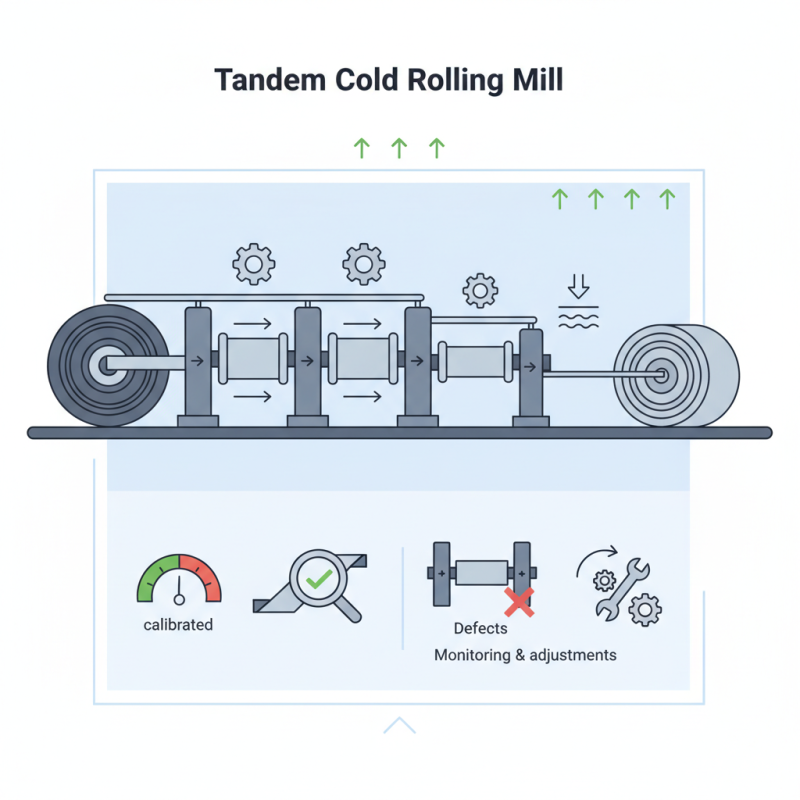
What is a Tandem Cold Rolling Mill?
A tandem cold rolling mill is a type of industrial equipment used to reduce the thickness of metal strips. This process involves passing the metal through several rolling stands, each one reducing the thickness further. Often employed in steel and aluminum production, these mills are essential for producing thin gauges of metal sheets. According to a report by Global Market Insights, the cold rolling market is projected to reach over $200 billion by 2025.
In a tandem setup, multiple stands are arranged in sequence. The metal strip enters the first stand, which applies significant pressure to thin the material. After passing through, the strip continues to the next stand. This system enhances efficiency, as multiple reductions occur in one continuous process. A recent study revealed that tandem mills can increase production efficiency by up to 30%. However, operators must monitor the mill closely to avoid defects like surface cracking and dimensional inaccuracies.
Despite the advantages, the tandem cold rolling mill process has its challenges. Maintaining uniform thickness can be tricky. Variations in temperature or material properties might lead to uneven results. Additionally, the initial setup costs and maintenance can be steep. Operators must continually assess these factors for optimal performance, reflecting a commitment to both quality and innovation in manufacturing processes.
Tandem Cold Rolling Mill Production Efficiency
Key Components of a Tandem Cold Rolling Mill
A tandem cold rolling mill is a complex machinery used in the metal processing industry. Its key components play a crucial role in ensuring high efficiency and quality of rolled materials. The rolling stands, for example, consist of several pairs of rolls, which are critical in reducing thickness and improving surface finish. These stands typically operate at speeds of up to 1,200 meters per minute, pushing the limits of productivity.
Another important aspect is the roll cooling system. It maintains optimal temperatures to prevent overheating. Inadequate cooling can lead to defects in the final product. Studies have shown that a well-implemented cooling system can enhance product quality by 15%. Additionally, automation controls monitor the process, adjusting parameters in real-time. This technology minimizes human error and increases consistency in production.
Rolls are often made from high-quality alloy steel, ensuring durability. However, maintaining them is a challenge. Regular inspections and reconditioning are necessary. Reports indicate that neglecting maintenance can shorten the rolls' lifespan by up to 30%. Such issues highlight the importance of a proactive maintenance strategy in prolonging the equipment's effectiveness.
The Process of Tandem Cold Rolling Explained
Tandem cold rolling mills are vital in metalworking. This process involves passing metal strips through multiple rollers. Each pass reduces thickness and improves surface quality. The rollers operate closely together, allowing for continuous rolling without interruption.
During the process, the metal strip is fed through a series of powered rollers. These rollers exert pressure, which decreases the strip’s thickness. The temperature remains low, which is essential for maintaining the metal's properties. This method enhances strength and yield strength.
Tips: Always monitor the strip's temperature. A higher temperature can lead to defects. Regular maintenance of the rollers is crucial too. Worn-out rollers can cause inconsistencies in thickness.
It’s important to control the speed during rolling. Too fast can result in defects like wrinkling or uneven surfaces. Observing the process closely allows for timely adjustments. Feedback from operators can highlight areas needing improvement. Not every batch will turn out perfect. Learning from errors will refine skills and processes.
Advantages of Using Tandem Cold Rolling Mills
Tandem cold rolling mills are vital in metal processing. They streamline the production of thin metal sheets, crucial for various industries. These mills consist of multiple rolling stands arranged in sequence. They work together to achieve high efficiency. The process involves feeding metal strips through the stands where they are compressed and elongated. Each stand further reduces thickness, enhancing quality.
Using tandem cold rolling mills offers several advantages. One significant benefit is increased productivity. The continuous operation minimizes downtime between rolls, allowing for a steady output. Additionally, the precision in thickness control is impressive. With advanced technology, these mills achieve uniformity across the entire product. However, the setup requires significant initial investment. Maintenance can also be challenging.
Cost savings are another key advantage. The efficiency of tandem mills often leads to reduced energy consumption. They use less raw material compared to traditional methods. Yet, one must monitor quality closely to avoid producing defects. Over time, this reliance on technology may pose risks if not managed properly. The balance between efficiency and quality needs constant attention.
Applications and Industries Utilizing Tandem Cold Rolling
Tandem cold rolling mills are crucial in various industries. These mills can produce thin metal sheets, which are essential in automotive and electronics sectors. The demand for lighter vehicles and compact electronics drives the need for high-quality rolled products.
Automotive manufacturers seek thinner and stronger materials. According to industry reports, the automotive market anticipates a growth rate of over 5% annually. This growth pushes for advanced rolling technologies that maintain sheet integrity while reducing weight. Alloyed steel sheets, often processed in tandem mills, offer excellent performance but require precise rolling techniques.
Electronics also heavily rely on tandem cold rolling. The production of aluminum and copper foils for circuit boards is a prime example. Reports indicate that the electronics industry will see robust growth, reaching over $1 trillion by 2030. Despite advancements, challenges remain in optimizing the rolling process. Many mills struggle with maintaining consistent thickness, which can affect end product quality. This highlights the ongoing need for innovation in the tandem cold rolling process.