How to Choose the Right Orthopedic Boots for Your Needs?
Choosing the right orthopedic boots is crucial for those dealing with foot or lower limb conditions. According to a recent study by the American Academy of Orthopedic Surgeons, nearly 50% of adults experience foot pain at some point in their lives. This statistic underscores the importance of proper footwear. Dr. James Malone, a leading orthopedic specialist, emphasizes, "The right orthopedic boots can significantly improve your quality of life."
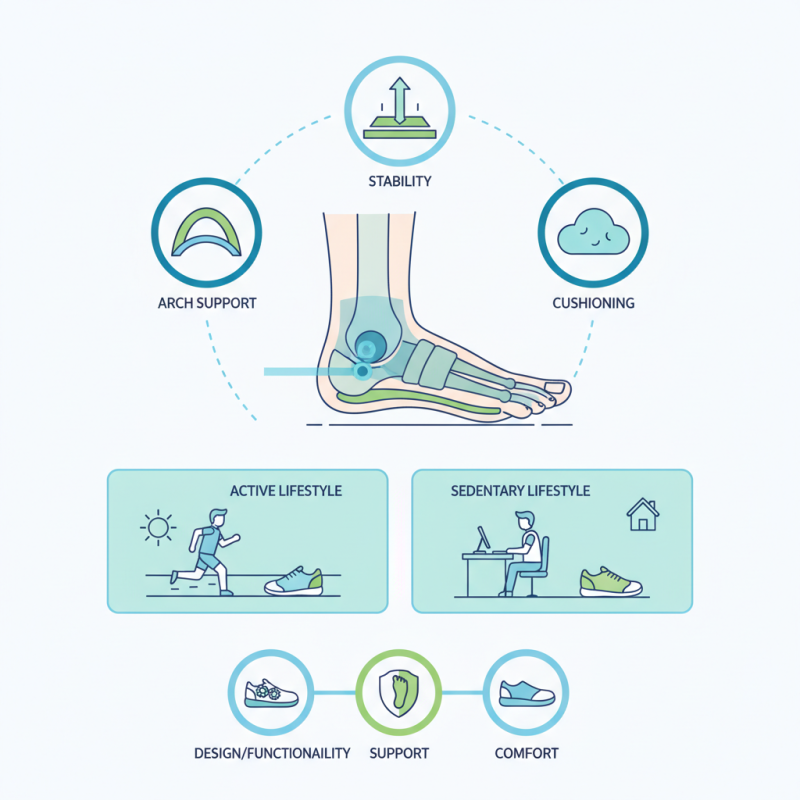
Customizing your choice of orthopedic boots requires understanding your specific needs. Do you need extra arch support? Maybe you are looking for enhanced stability or cushioning. Each individual has unique foot mechanics, which means one size does not fit all. Many people overlook this and end up with ill-fitting boots that do not address their problems.
It's essential to reflect on your lifestyle and daily activities when choosing orthopedic boots. The right pair can mitigate pain and encourage mobility. Yet, many consumers focus solely on aesthetics rather than functionality. This oversight can lead to further complications. Careful consideration of design, support, and comfort levels can safeguard against future issues.
Factors to Consider When Selecting Orthopedic Boots
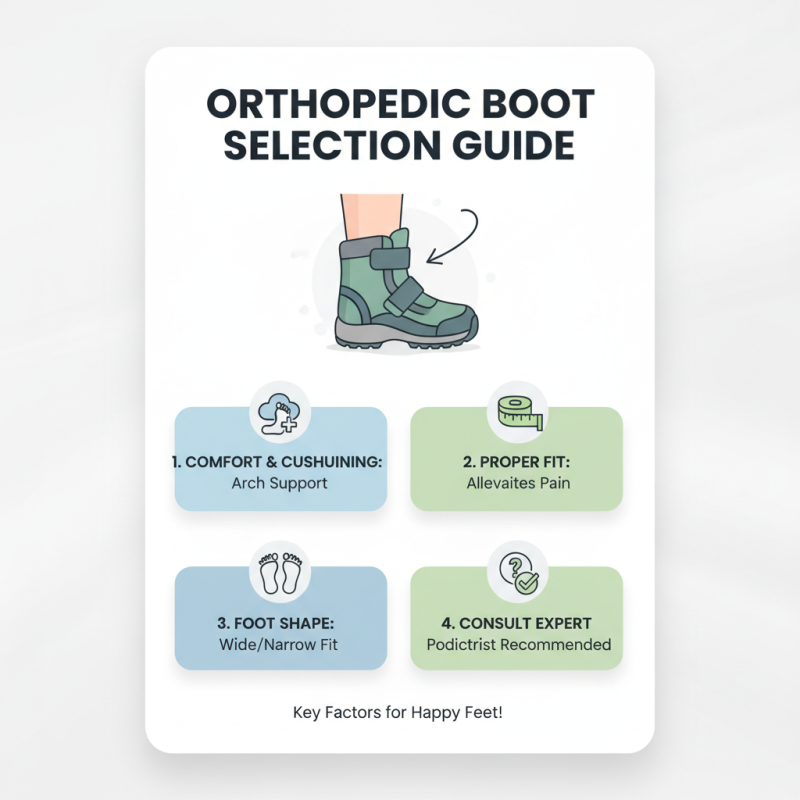
When selecting orthopedic boots, several factors come into play. Comfort is crucial. Look for boots that provide adequate arch support and cushioning. A proper fit is essential for alleviating pain. Consider your foot shape. Wide or narrow, understanding your foot dimensions helps narrow your choices.
Material matters too. Quality materials enhance durability and comfort. Breathable fabrics keep your feet dry. Waterproof options are great for different weather conditions.
Tips for choosing the right boots: Test them while walking. Assess how they feel under various conditions. Don’t rush the process; take your time. Seek advice from healthcare professionals if necessary. Think about the boot’s weight. Heavier boots can lead to fatigue.
Additionally, think about the style. Orthopedic boots come in various styles that can be both functional and aesthetically pleasing. Just because they are supportive does not mean they cannot look good. In the end, the right orthopedic boots combine function with personal style, making them a worthwhile investment.
Understanding Different Types of Orthopedic Boots
When choosing orthopedic boots, understanding the different types is essential. There are several categories available, each designed for specific needs. Rigid boots provide excellent support. They help immobilize the foot and ankle during recovery. These are ideal for severe injuries or post-operative care.
Another type is the soft boot, which offers cushioning and flexibility. These are suitable for less serious conditions like plantar fasciitis or minor sprains. They allow for movement while still providing necessary protection. Some boots even incorporate arch support to enhance comfort.
It's crucial to evaluate your lifestyle and daily activities. A boot that works well for rehabilitation might not suit an active routine. Consider the terrain you navigate daily. A heavy design may hinder movement. On the flip side, a lighter boot might lack sufficient support for specific injuries. Each choice comes with its pros and cons. Make your selection carefully based on these factors.
How to Choose the Right Orthopedic Boots for Your Needs? - Understanding Different Types of Orthopedic Boots
| Type of Orthopedic Boot |
Purpose |
Key Features |
Ideal For |
| Post-Operative Boots |
Recovery after surgery |
Rigid sole, removable liner, adjustable straps |
Post-surgery patients |
| Walking Boots |
Fractures or sprains |
Air cushioning, ankle support, lightweight |
Patients with lower limb injuries |
| Diabetic Boots |
Diabetic foot ulcers |
Soft interior, adjustable design, pressure relief |
Diabetic patients |
| Sports Orthopedic Boots |
Sports injuries |
Shock absorption, extra support, breathable materials |
Athletes and active individuals |
| Ankle Support Boots |
Chronic ankle instability |
Stiff design, high top, custom fit |
Individuals with weak ankles |
Assessing Your Foot and Arch Type for Optimal Fit
Choosing the right orthopedic boots is crucial for comfort and support. Each foot is unique, affected by factors like arch type and foot shape. A recent study suggests that 70% of people have some form of foot deformity. This underlines the importance of assessing your own foot structure.
Understanding your arch is essential. There are three main types: flat, neutral, and high. A survey revealed that approximately 25% of the population has flat feet. This condition can lead to complications such as plantar fasciitis and tendonitis. For those with high arches, there can be issues like instability, increasing the risk of injury. Using custom orthotics can enhance fit and provide necessary support.
When selecting boots, consider not just comfort but also functionality. A poorly fitted boot can exacerbate existing issues. Check if the heel counter provides adequate stability. Also, evaluating the width of the boot ensures that there is no pinching. Remember, your choice should reflect your foot's needs, helping to prevent future pain and injury.
Evaluating Materials and Construction Quality
When choosing orthopedic boots, evaluating materials and construction quality is crucial. Studies show that nearly 75% of people suffer from foot pain at some point. The right boot can alleviate discomfort and promote healing. Materials can differ widely. High-quality leather, for instance, offers durability while maintaining flexibility. Understanding material properties can enhance comfort.
Construction quality plays a pivotal role in the boot's performance. Boots should have a well-structured sole, providing necessary arch support. According to orthopedic experts, a rigid yet lightweight built can help reduce strain on the feet. Reinforcement in the toe and heel areas enhances stability. Many boots fail due to inadequate craftsmanship, leading to early wear or poor performance.
Customers often overlook the significance of breathability. This factor can influence comfort during prolonged wear. A poorly ventilated boot can cause excessive sweating, leading to skin issues. It’s essential to assess how different materials manage moisture. Reliable sources, including orthopedic journals, emphasize the need for proper fit and support. A well-constructed boot connects to health outcomes, aligning with user needs for effective rehabilitation.
Consultation with Healthcare Professionals for Guidance
Consultation with healthcare professionals is crucial when selecting orthopedic boots.
Experts can assess your specific foot condition and individual needs. They offer insights into what features will support your recovery.
Whether it’s arch support or ankle stability, their advice can guide you to the right choice.
Physical therapists or podiatrists often have a wealth of experience. They understand various conditions like plantar fasciitis or sprains.
They know which boots work best for different issues. Additionally, they can recommend specific adjustments or custom insoles.
This tailored approach can make a significant difference in your healing process.
Sometimes, you may feel overwhelmed by options.
It’s easy to overlook essential features when you're in a hurry. Asking the right questions can clarify your requirements.
Mistakes can lead to discomfort or delay your recovery.
Engaging with professionals ensures you’re making the best decision. Their guidance helps you navigate this complex therapeutic landscape effectively.