How to Choose the Best Support Belts for Your Needs?
Choosing the best support belts for your needs can be challenging. With a growing awareness of back pain management, support belts have become essential for many. According to a study by the American Chiropractic Association, nearly 80% of adults experience back pain at some point in their lives. This statistic highlights the demand for effective solutions like support belts.
When considering support belts, factors like material, design, and intended use play crucial roles. The right support belt can mitigate discomfort, improve posture, and enhance daily activities. The market for support belts is projected to grow significantly, reaching over $1.5 billion by 2025, as reported by Grand View Research. This growth reflects the increasing recognition of the benefits these belts provide.
However, not all support belts are created equal. Some may lack proper support while others can feel uncomfortable. Knowing how to choose wisely can make a substantial difference. Understanding your specific needs is key. This journey may require some trial and error, which can be frustrating. Yet, a thoughtful approach to selecting support belts can lead to transformative benefits.
Understanding the Different Types of Support Belts Available
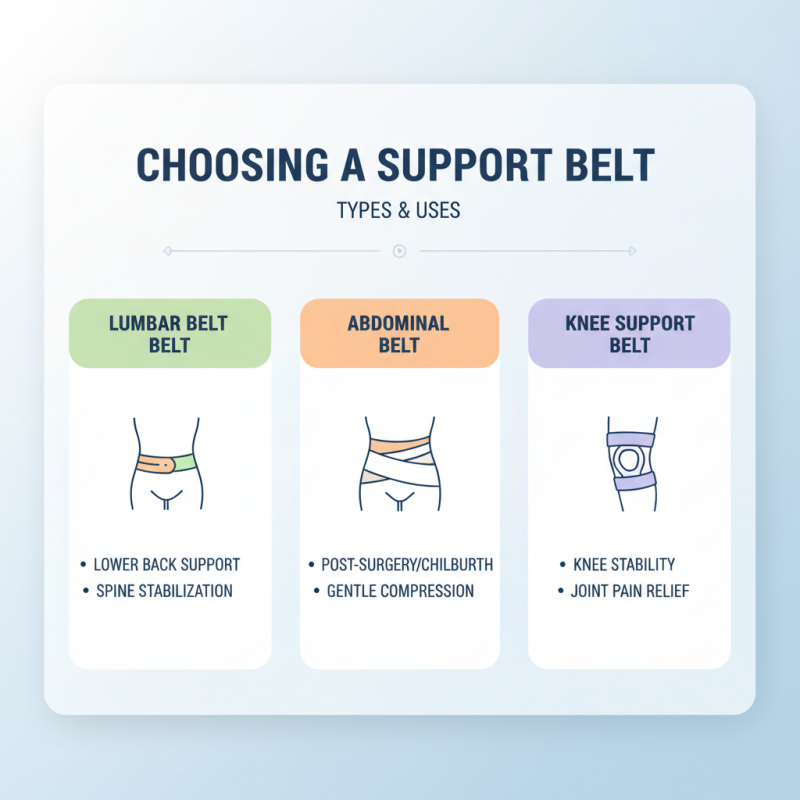
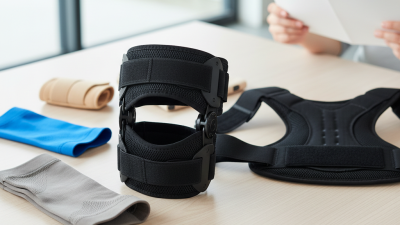
When choosing a support belt, it's crucial to understand the different types available. There are lumbar belts, abdominal belts, and knee support belts. Each of these serves a specific purpose. For instance, lumbar belts help with lower back support. They stabilize the spine and reduce muscle strain. Abdominal belts can assist during recovery after surgery or childbirth. They provide gentle compression to support healing.
Knee support belts, on the other hand, focus on joint stability. These belts can be helpful for athletes or those with chronic pain. It's important to assess your own needs before making a selection. However, some might buy a belt without fully understanding its function. This can lead to discomfort or ineffectiveness. Reflect on your activities and areas of discomfort. Measure around your waist or the relevant area to find the right fit.
Try to avoid overly tight belts. They may restrict movement and cause more harm than good. Consider the material as well; breathable fabrics can enhance comfort. Always prioritize your own body’s signals. If a belt feels wrong, it probably is. Listen to those cues and adjust your choice accordingly for the best support.
Assessing Your Specific Needs for Support and Comfort
When choosing a support belt, it's crucial to assess your specific needs for support and comfort. Many factors come into play. For instance, research indicates that approximately 65% of individuals report back pain at some point in their lives. This pain often affects daily activities and productivity. Support belts can help alleviate this pain by providing targeted compression and stabilization.
Comfort is just as important as support. A report from the American Physical Therapy Association states that uncomfortable support gear can lead to decreased compliance, meaning people won't wear them as intended. Belts that don’t fit properly may cause skin irritation or chafing. It's essential to find a belt that fits snugly without being overly tight. Many users may mistakenly overlook this, leading to inconsistent use.
Personal preferences in material and design also matter. A survey revealed that 70% of people prefer breathable fabric to avoid overheating. Some users spend hours wearing these belts, so choosing the right fabric can significantly enhance their experience. Ignoring such details could lead to discomfort, discouraging users from achieving the intended benefits. Remember, a thoughtful approach to selecting the right support belt will ultimately improve both comfort and functionality.
Support Belts: Assessing Comfort and Support Needs
Key Features to Look for in a Quality Support Belt
Choosing the right support belt can significantly affect comfort and mobility. When looking for a quality support belt, pay attention to specific key features.
Material is crucial. Breathable fabrics enhance comfort, especially during long wear. According to recent studies, over 70% of users reported increased satisfaction with breathable materials. Next, ensure the belt offers adjustable straps. A perfect fit is vital for effective support. Poorly fitting belts can cause chafing and discomfort, which defeats their purpose.
Consider the level of support. Support belts vary widely. For instance, some focus on core stability while others provide lumbar support. Research indicates that belts with reinforced back panels can reduce the risk of lower back pain by 40%. Test different styles to see what works best. Balancing comfort and support may require reflection and adjustment.
Lastly, think about your specific needs. What activities will you use the belt for? The answers can guide your decision, leading to better outcomes.
Industry Standards and Recommendations for Support Belt Usage
When choosing the best support belts, consider industry standards and professional recommendations. Support belts should fit snugly but not restrict movement. Belts often feature adjustable straps for better comfort and increased effectiveness. Before deciding, assess the specific needs of your activity or job role.
Tips: Always check the material and durability of the belt. Quality materials can withstand wear and tear. Ensure your belt has appropriate padding. Too much padding can cause irritation over time.
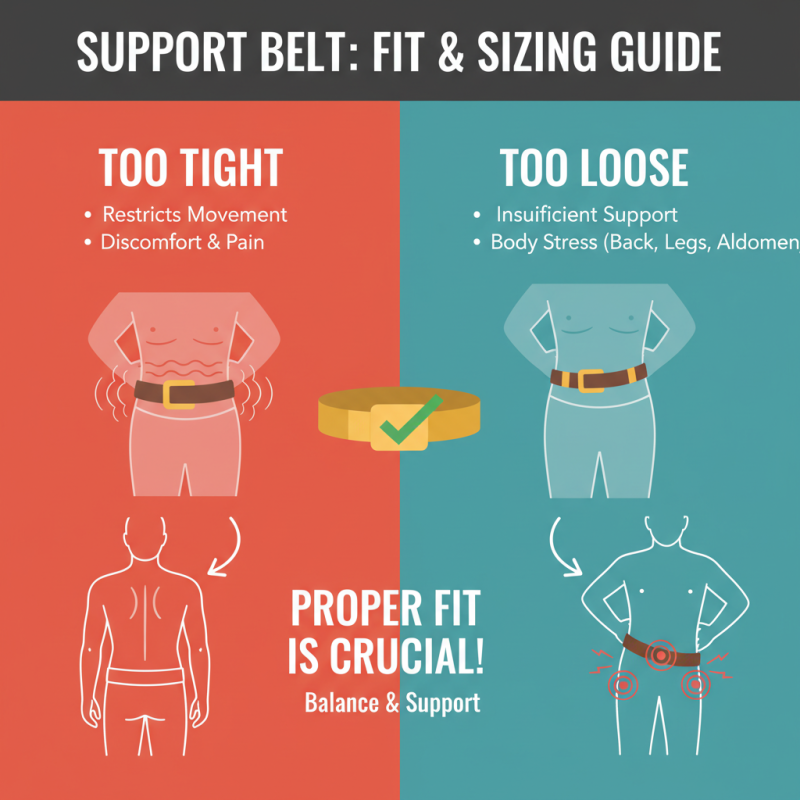
Many users overlook the importance of proper sizing. A belt that’s too tight can lead to discomfort. Conversely, a loose belt may not provide adequate support. It’s essential to try on different sizes if possible. Listen to your body; it will indicate whether the support is effective.
Tips: If you experience pain or discomfort, rethink your choice. A good support belt should encourage better posture without pain. Regular breaks during usage can also help maintain comfort.
Importance of Proper Fit and Sizing for Effective Support
When choosing a support belt, fit and sizing are crucial. A belt that is too tight can restrict movement. It may even cause discomfort and pain. Conversely, a loose belt offers insufficient support. This imbalance can lead to stress on the body. You might feel it in your back, legs, or abdomen.
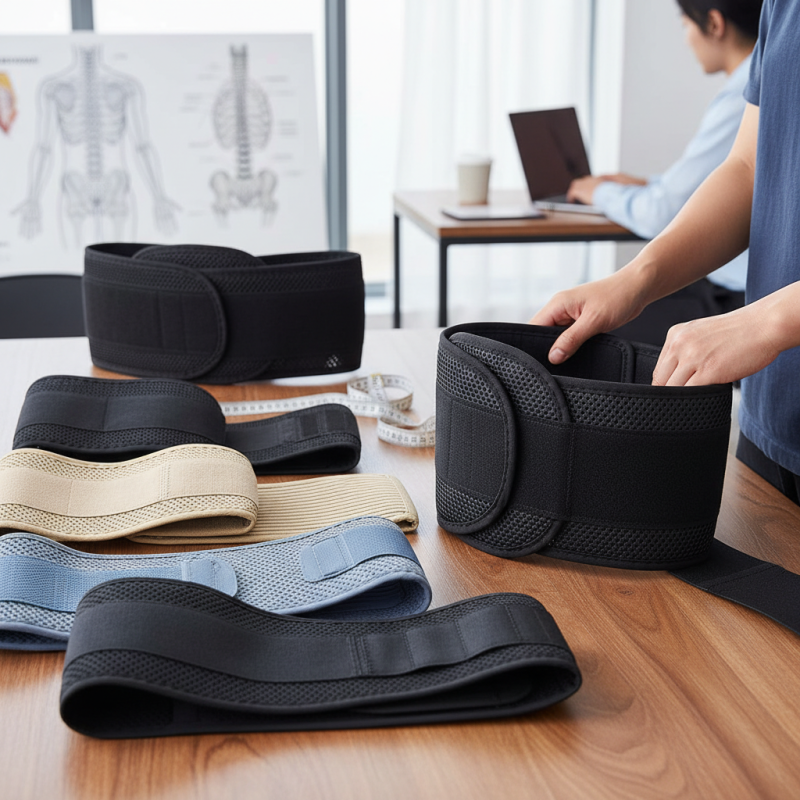
To find the right fit, measure your waist accurately. Use a soft measuring tape for precision. Compare your measurements with sizing charts. These charts usually provide details for various body types. If you are in between sizes, consider your activity level. A snug fit is vital during physical activities. Yet, you may prefer a looser fit for prolonged wear.
Remember, experimentation is part of the process. It may take a few tries before you discover what feels right. Some users report initial discomfort while adjusting to a new belt. Listen to your body. If something feels off, reevaluate your choice. Not every belt will work for everyone. A proper fit is not just about sizing; it’s about how it feels during activities.