Best Car Engine Stand for Home Mechanics How to Choose?
When it comes to maintaining a vehicle, home mechanics often overlook the importance of a car engine stand. Renowned automotive expert John Smith once said, “Investing in a quality car engine stand can make or break your engine overhaul process.” His insight highlights the significance of choosing the right equipment.
Selecting a car engine stand requires careful thought. It's essential to assess weight capacities and stability features. A stand that seems sturdy but wobbles can lead to dangerous situations. Mechanics should also consider the maneuverability of the stand. A heavy stand can be difficult to move, which may hinder the repair process.
It's easy to see a car engine stand as just another tool. However, the right choice can enhance safety and efficiency. Without proper support, the work could take longer and become frustrating. The small details, like adjustable arms and rolling wheels, often make a significant difference. Thoughtful investment in a reliable car engine stand is crucial for a smooth repair experience.
Features to Look for in a Car Engine Stand
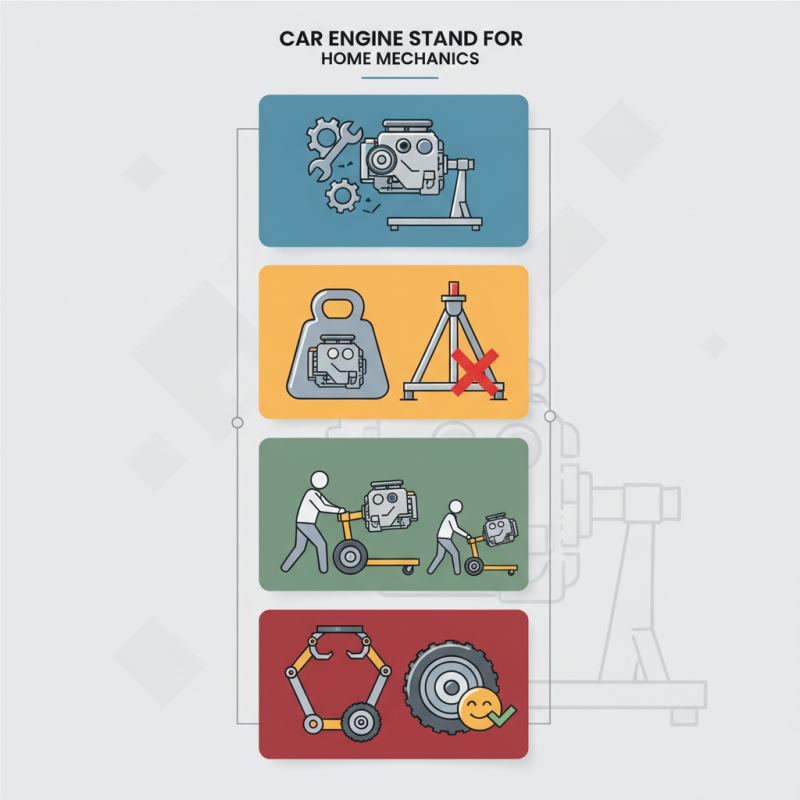
When choosing a car engine stand, consider its weight capacity. Most stands can hold between 1,000 to 2,000 pounds. Ensure it matches the weight of your engine. Materials matter too. Steel stands are durable. Aluminum ones are lighter but may not be as stable. Look for a solid, stable base. A wobbly engine stand is risky.
Height adjustment features are crucial. This allows you to work comfortably. Taller mechanics or those working in tight spaces will benefit more. Check if it has wheels. Mobility can be a game-changer. Engine stands with lockable wheels offer safety and convenience.
Here’s a tip: always check the assembly instructions. Some stands can be tricky to put together. An overlooked bolt can lead to accidents. Always do a stability test before lifting an engine. Make adjustments if needed. It’s better to be cautious than sorry.
Best Car Engine Stand for Home Mechanics - Features to Look for
| Feature | Description | Importance |
| Weight Capacity | The maximum weight the stand can support, crucial for handling various engine types. | High |
| Material | The construction material affects durability and stability. | High |
| Adjustability | Ability to adjust height and width to match different engine sizes. | Medium |
| Mobility | Presence of wheels for easy movement around the workshop. | Medium |
| Stability | Base design that prevents tipping during use. | High |
| Assembly | Ease of assembly and disassembly for storage. | Medium |
| Price | Cost effectiveness compared to features and durability. | Medium |
Types of Car Engine Stands: A Comparison
When selecting an engine stand, understanding the types available is crucial. There are three main categories: rotatable, fixed, and adjustable stands. Rotatable stands offer flexibility; they allow mechanics to spin the engine for easy access. Fixed stands, on the other hand, provide stability but may restrict movement. Adjustable stands feature a height setting, making them versatile for various engine sizes.
Many home mechanics prefer rotatable engine stands for their convenience. However, some users find them less stable. Sometimes, the rotating mechanism can become stiff, leading to more hassle than help. Fixed stands are often simpler but can be awkward for larger engines. Users may struggle to find a comfortable working height. Adjustable stands attempt to solve both problems, but they can be bulkier and harder to store.
Choosing the right stand should consider frequency of use. Mechanics occasionally performing engine work may prefer simplicity over versatility. It's important to test the stands in person if possible. Not all stands are made equally; quality varies widely. Pay attention to the materials and weight capacity. A well-built stand is essential for safety and efficiency.
Weight Capacity Considerations for Engine Stands
When choosing an engine stand, weight capacity is crucial. Many engine stands support between 1,000 to 2,500 pounds. Keep in mind the weight of the engine you’ll be working on. This consideration ensures safety and stability during your projects.
Tip: Check the specifications of your engine and compare it with the stand's capacity. It's wise to select a stand rated for at least 20% more than your engine's weight. This extra margin adds safety.
DIY mechanics often underestimate the factors of weight capacity. Some stands appear sturdy but may wobble under heavy loads. Testing the stability before placing an engine can save you from potential disasters. Ensure all locks and supports function properly.
Tip: Before committing to a stand, examine the assembly. Some designs are harder to put together. Look for user-friendly options that offer robust support and are easy to disassemble when needed. This flexibility is essential for home mechanics.
Adjustability and Maneuverability in Engine Stands
Choosing the right car engine stand is crucial for home mechanics. Adjustability is a key feature to consider. A study by the Automotive Service Association revealed that engine stands with a height adjustable feature can reduce strain on the back by up to 30%. This can make a significant difference during long hours of disassembly or assembly.
Maneuverability is equally important. A stand that easily swivels and rolls can save time and effort. Research indicates that mechanics spend around 20% of their time moving tools and equipment. An engine stand that allows for easy movement minimizes this wasted time. Features like locking casters can enhance stability while working.
Some users find it challenging to decide on the right degree of adjustability. Too many options can lead to confusion. Others might overlook the importance of reach and flexibility when dealing with different engine sizes. It's vital to assess the specific needs of your projects before making a choice.
Budgeting Tips for Buying an Engine Stand
When considering an engine stand, budgeting is key. You want a sturdy stand, not a flimsy one that can crumble under pressure. Set a clear budget before shopping. It helps narrow your choices. Quality stands may cost more but can save you money in the long run.
Consider the weight capacity you need. Some stands can handle heavier engines. Others cannot. Avoiding disappointment is essential. If you have a large engine, don’t skimp on the price.
Also, think about storage. Some engine stands can take up a lot of space. If you have a small garage, look for foldable options. They still provide stability and can be stored away easily. If you compromise on size, make sure it meets your needs. A balance between budget, quality, and convenience is crucial.